Showing 81–96 of 1012 resultsSorted by price: low to high
-
€5.95
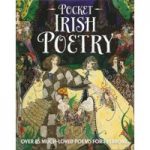
In the words of Seamus Heaney, great poetry can ‘Catch the heart off guard and blow it open’. This beautifully illustrated collection contains the greatest poems from the greatest Irish poets, including Jonathan Swift, Thomas Moore, Oscar Wilde, WB Yeats, James Joyce, Patrick Kavanagh and Seamus Heaney. Discover classic works such as My Dark Rosaleen and The Ballad of Reading Gaol alongside more modern pieces such as Postscript, He Wishes for the Cloths of Heaven, Epic and The Planter’s Daughter. Dive in and let your heart ‘Dance like a wave of the sea’.
-
€5.95
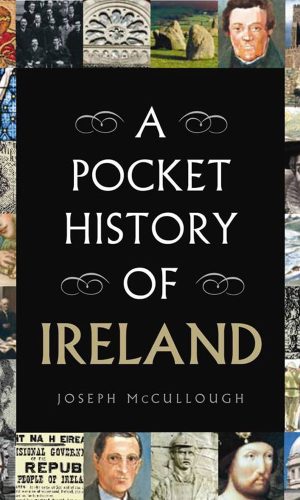
A look at the history of Ireland from the earliest tomb builders before the arrival of the Celts to the modern Ireland of today.
-
€6.00
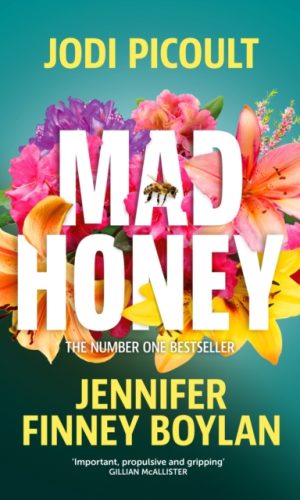
Olivia fled her abusive marriage to return to her hometown and take over the family beekeeping business when her son, Asher, was six. Now, impossibly, her baby is six feet tall and in his last year of high school, a kind, good-looking, popular ice hockey star with a tiny sprite of a new girlfriend. Lily also knows what it feels like to start over – when she and her mother relocated to New Hampshire it was all about a fresh start.
She and Asher couldn’t help falling for each other, and Lily feels happy for the first time. But can she trust him completely? Then Olivia gets a phone call – Lily is dead, and Asher is arrested on a charge of murder. As the case against him unfolds, she realises he has hidden more than he’s shared with her.
And Olivia knows firsthand that the secrets we keep reflect the past we want to leave behind – and that we rarely know the people we love as well as we think we do.
-
€6.50
Wilkie Collins is a master of mystery, and The Woman in White is his first excursion into the genre. When the hero, Walter Hartright, on a moonlit night in north London, encounters a solitary, terrified and beautiful woman dressed in white, he feels impelled to solve the mystery of her distress. The intricate plot is peopled with a finely characterised cast, from the peevish invalid Mr Fairlie to the corpulent villain Count Fosco and the enigmatic woman herself.
-
€6.50
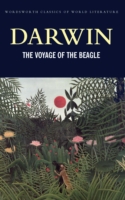
Charles Darwin’s travels around the world as an independent naturalist on HMS Beagle between 1831 and 1836 impressed upon him a sense of the natural world’s beauty and sublimity which language could barely capture. Words, he said, were inadequate to convey to those who have not visited the inter-tropical regions, the sensation of delight which the mind experiences’. Yet in a travel journal which takes the reader from the coasts and interiors of South America to South Sea Islands, Darwin’s descriptive powers are constantly challenged, but never once overcome.
In addition, The Voyage of the Beagle displays Darwin’s powerful, speculative mind at work, posing searching questions about the complex relation between the Earth’s structure, animal forms, anthropology and the origins of life itself.
-

€6.50
The three works in this collection, all dating from Nietzsche’s last lucid months, show him at his moststimulating and controversial: the portentous utterances of the prophet (together with the ill-defined figure of the Ubermensch) are forsaken, as wit, exuberance and dazzling insights predominate, forcing the reader to face unpalatable insights and to rethink every commonly accepted ‘truth’. Thinking with Nietzsche, in Jaspers’ words, means holding one’s own against him, and we are indeed refreshed and challenged by the vortex of his thoughts, by concepts which test and probe. In The Twilight of the Idols, The Antichrist and Ecce Homo Nietzsche writes at breakneck speed of his provenance, his adversaries and his hopes for mankind; the books are largely epigrammatic and aphoristic, allowing this poet-philosopher to bewilder and fascinate us with their strangeness and their daring.
He who fights with monsters, Nietzsche once told us, should look to it that he himself does not become one, and when you gaze long into an abyss the abyss also gazes into you. Reader, beware.
-

€6.50
Dating from around 300BC, Tao Te Ching is the first great classic of the Chinese school of philosophy called Taoism. Within its pages is summed up a complete view of the cosmos and how human beings should respond to it. A profound mystical insight into the nature of things forms the basis for a humane morality and vision of political utopia.
The ideas in this work constitute one of the main shaping forces behind Chinese spirituality, art and science, so much so that no understanding of Chinese civilisation is possible without a grasp of Taoism. This edition presents the authoritative translation by Arthur Waley, with a new Introduction reflecting recent developments in the interpretation of the work.
-
€6.50
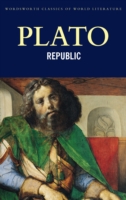
The ideas of Plato (c429-347BC) have influenced Western philosophers for over two thousand years. Such is his importance that the twentieth-century philosopher A.N. Whitehead described all subsequent developments within the subject as foot-notes to Plato’s work.
Beyond philosophy, he has exerted a major influence on the development of Western literature, politics and theology. The Republic deals with the great range of Plato’s thought, but is particularly concerned with what makes a well-balanced society and individual. It combines argument and myth to advocate a life organized by reason rather than dominated by desires and appetites.
Regarded by some as the foundation document of totalitarianism, by others as a call to develop the full potential of humanity, the Republic remains a challenging and intensely exciting work.
-
€6.50
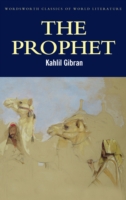
The Prophet represents the acme of Kahlil Gibran’s achievement. Writing in English, Gibran adopted the tone and cadence of King James I’s Bible, fusing his personalised Christian philosophy with a spirit and oriental wisdom that derives from the richly mixed influences of his native Lebanon. His language has a breath-taking beauty.
Before returning to his birthplace, Almustafa, the ‘prophet’, is asked for guidance by the people of Orphalese. His words, redolent with love and understanding, call for universal unity, and affirm Gibran’s certainty of the correlated nature of all existence, and of reincarnation. The Prophet has never lost its immediate appeal and has become a ubiquitous touchstone of spiritual literature.
-

€6.50
A grain in the balance will determine which individual shall live and which shall die…’. Darwin’s theory of natural selection issued a profound challenge to orthodox thought and belief: no being or species has been specifically created; all are locked into a pitiless struggle for existence, with extinction looming for those not fitted for the task. Yet The Origin of Species (1859) is also a humane and inspirational vision of ecological interrelatedness, revealing the complex mutual interdependencies between animal and plant life, climate and physical environment, and – by implication – within the human world.
Written for the general reader, in a style which combines the rigour of science with the subtlety of literature, The Origin of Species remains one of the founding documents of the modern age.
-

€6.50
Rene Descartes has been described as the “father” of modern philosophy. This selection of Descartes’ writings attempt to answer central questions surrounding self, God, free-will and knowledge, using the science of thought as opposed to received wisdom based on the tenets of faith.
-

€6.50
Gibbon’s Decline and Fall of the Roman Empire, published between 1776 and 1788, is the undisputed masterpiece of English historical writing which can only perish with the language itself. Its length alone is a measure of its monumental quality: seventy-one chapters, of which twenty-eight appear in full in this edition. With style, learning and wit, Gibbon takes the reader through the history of Europe from the second century AD to the fall of Constantinople in 1453 – an enthralling account by ‘the greatest of the historians of the Enlightenment’.
This edition includes Gibbon’s footnotes and quotations, here translated for the first time, together with brief explanatory comments, a precis of the chapters not included, 16 maps, a glossary, and a list of emperors.
-
€6.50
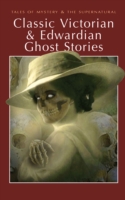
This is a book to be read by a blazing fire on a winter’s night, with the curtains drawn close and the doors securely locked. The unquiet souls of the dead, both as fictional creations and as ‘real’ apparitions, roam the pages of this haunting new selection of ghost stories by Rex Collings. Some of these stories are classics while others are lesser-known gems unearthed from this vintage era of tales of the supernatural.
There are stories from distant lands – ‘Fisher’s Ghost’ by John Lang is set in Australia and ‘A Ghostly Manifestation’ by ‘A Clergyman’ is set in Calcutta. In this selection, Sir Walter Scott (a Victorian in spirit if not in fact), keeps company with Edgar Allen Poe, Sheridan Le Fanu and other illustrious masters of the genre.
-
€6.95
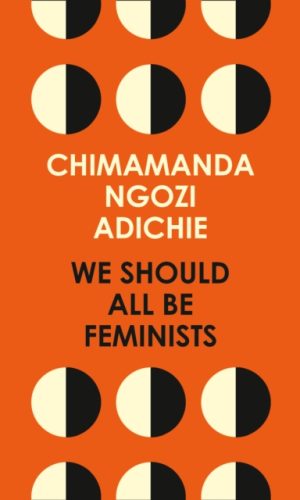
ADICHIE, CHIMAMANDA NGOZI
-
-
€6.95
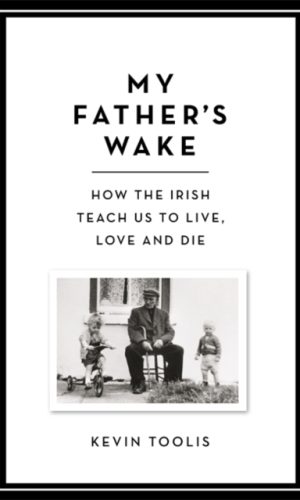
In this beautifully written and highly original memoir, he gives an intimate, eye-witness account of the death and wake of his father, and explores the wider history of the Irish Wake. With an uplifting, positive message at its heart, My Father’s Wake celebrates the spiritual depth of the Irish Wake and shows how we too can find a better way to deal with our mortality, by living and loving in the acceptance of death.