MACBETH
€5.00Encompasses witchcraft, bloody murder, and ghostly apparitions. This work tells the tragedy of a good, brave and honourable man turned into the personification of evil by the workings of unreasonable ambition.

Showing 49–64 of 1012 resultsSorted by price: low to high
Encompasses witchcraft, bloody murder, and ghostly apparitions. This work tells the tragedy of a good, brave and honourable man turned into the personification of evil by the workings of unreasonable ambition.
Lorna Doone, a Romance of Exmoor is an historical novel of high adventure set in the South West of England during the turbulent time of Monmouth’s rebellion (1685). It is also a moving love story told through the life of the young farmer John Ridd, as he grows to manhood determined to right the wrongs in his land, and to win the heart and hand of the beautiful Lorna Doone.
One of the great Classics of Western Literature, Les Miserables is a magisterial work which is rich in both character portrayal and meticulous historical description. Characters such as the absurdly criminalised Valjean, the street urchin Gavroche, the rascal Thenardier, the implacable detective Javert, and the pitiful figure of the prostitute Fantine and her daughter Cosette, have entered the pantheon of literary dramatis personae.
The flaxen-haired beauty of the childlike Lady Audley would suggest that she has no secrets. But M.E. Braddon’s classic novel of sensation uncovers the truth about its heroine in a plot involving bigamy, arson and murder.
It challenges assumptions about the nature of femininity and investigates the narrow divide between sanity and insanity, using as its focus one of the most fascinating of all Victorian heroines. Combining elements of the detective novel, the psychological thriller and the romance of upper class life, Lady Audley’s Secret was one of the most popular and successful novels of the nineteenth century and still exerts a powerful hold on readers.

The Wordsworth Classics’ Shakespeare Series presents a newly-edited sequence of William Shakespeare’s works. The textual editing takes account of recent scholarship while giving the material a careful reappraisal. King Lear has been widely acclaimed as Shakespeare’s most powerful tragedy.
Elemental and passionate, it encompasses the horrific and the heart-rending. Love and hate, loyalty and treachery, cruelty and self-sacrifice: all these contend in a tempestuous drama which has become an enduring classic of the world’s literature. In the theatre and on screen King Lear continues to challenge and enthral.
This Wordsworth edition of King Lear provides a comprehensive, integrated text of the play.

As Fyodor Karamazov awaits an amorous encounter, he is violently done to death. The three sons of the old debauchee are forced to confront their own guilt or complicity. Who will own to parricide? The reckless and passionate Dmitri? The corrosive intellectual Ivan? Surely not the chaste novice monk Alyosha? The search reveals the divisions which rack the brothers, yet paradoxically unite them.
Around the writhings of this one dysfunctional family Dostoevsky weaves a dense network of social, psychological and philosophical relationships. At the same time he shows – from the opening ‘scandal’ scene in the monastery to a personal appearance by an eccentric Devil – that his dramatic skills have lost nothing of their edge. The Karamazov Brothers, completed a few months before Dostoevsky’s death in 1881, remains for many the high point of his genius as novelist and chronicler of the modern malaise.
It cast a long shadow over D. H. Lawrence, Thomas Mann, Albert Camus, and other giants of twentieth-century European literature.
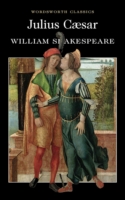
Julius Caesar is among the best of Shakespeare’s historical and political plays. Dealing with events surrounding the assassination of Julius Caesar in 44 B.C., the drama vividly illustrates the ways in which power and corruption are linked. The cry ‘Peace, freedom and liberty!’ is used to exculpate brutal realities, while personal ambitions taint public actions.
Rich in characterisation and replete with eloquent rhetoric, Julius Caesar remains engrossing and topical: a play for today.
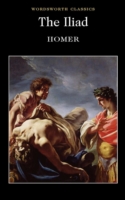
The product of more than a decade’s continuous work (1598-1611), Chapman’s translation of Homer’s great poem of war is a magnificent testimony to the power of The Iliad. In muscular, onward-rolling verse Chapman retells the story of Achilles, the great warrior, and his terrible wrath before the walls of besieged Troy, and the destruction it wreaks on both Greeks and Trojans. Chapman regarded the translation of this epic, and of Homer’s Odyssey (also available in Wordsworth Editions) as his life’s work, and dedicated himself to capturing the ‘soul’ of the poem.
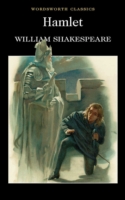
Hamlet is not only one of Shakespeare’s greatest plays, but also the most fascinatingly problematical tragedy in world literature. First performed around 1600, this a gripping and exuberant drama of revenge, rich in contrasts and conflicts. Its violence alternates with introspection, its melancholy with humour, and its subtlety with spectacle.
The Prince, Hamlet himself, is depicted as a complex, divided, introspective character. His reflections on death, morality and the very status of human beings make him ‘the first modern man’.
When The Forsyte Saga was shown on television in 1967 it was hugely successful. The nation was gripped by the masterful visual telling of the Forsyte family’s troubled story and adapted its activities to suit the next transmission. The Forsyte Saga, comprising The Man of Property, In Chancery and To Let is here produced by Wordsworth for the first time in a single volume.
Initially, the narrative centres on Soames Forsyte – a successful solicitor living in London with his beautiful wife Irene. A pillar of the late Victorian upper middle class, materially wealthy, his appears to be a golden existence endowed with all the necessary possessions for a ‘Man of Property’, but beneath this very proper exterior lies a core of unhappiness and brutal relationships. The marriage of Soames and Irene disintegrates in bitter recrimination, creating a feud within the family that will have far-reaching consequences.
Far from the Madding Crowd is perhaps the most pastoral of Hardy’s Wessex novels. It tells the story of the young farmer Gabriel Oak and his love for and pursuit of the elusive Bathsheba Everdene, whose wayward nature leads her to both tragedy and true love. It tells of the dashing Sergeant Troy whose rakish philosophy of life was ‘…the past was yesterday; never, the day after’.
And lastly, of the introverted and reclusive gentleman farmer, Mr Boldwood, whose love fills him with ‘…a fearful sense of exposure’, when he first sets eyes on Bathsheba. The background of this tale is the Wessex countryside in all its moods.
Jane Austen teased readers with the idea of a ‘heroine whom no one but myself will much like’, but Emma is irresistible. ‘Handsome, clever, and rich’, Emma is also an ‘imaginist’, ‘on fire with speculation and foresight’. She sees the signs of romance all around her, but thinks she will never be married.
Her matchmaking maps out relationships that Jane Austen ironically tweaks into a clearer perspective. Judgement and imagination are matched in games the reader too can enjoy, and the end is a triumph of understanding.
Contains stories that show us truants, seducers, gossips, rally-drivers, generous hostesses, corrupt politicians, failing priests, amateur theologians, struggling musicians, moony adolescents, victims of domestic brutishness, sentimental aunts and poets, patriots earnest or cynical, and people striving to get by.
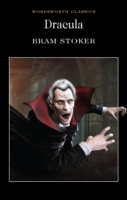
There he lay looking as if youth had been half-renewed, for the white hair and moustache were changed to dark iron-grey, the cheeks were fuller, and the white skin seemed ruby-red underneath; the mouth was redder than ever, for on the lips were gouts of fresh blood, which trickled from the corners of the mouth and ran over the chin and neck. Even the deep, burning eyes seemed set amongst the swollen flesh, for the lids and pouches underneath were bloated. It seemed as if the whole awful creature were simply gorged with blood; he lay like a filthy leech, exhausted with his repletion.’ Thus Bram Stoker, one of the greatest exponents of the supernatural narrative, describes the demonic subject of his chilling masterpiece Dracula, a truly iconic and unsettling tale of vampirism.

In seeking to discover his inner self, the brilliant Dr Jekyll discovers a monster. First published to critical acclaim in 1886, this mesmerising thriller is a terrifying study of the duality of man’s nature. Also included in this volume is Stevenson’s 1887 collection of short stories, The Merry Men and Other Tales and Fables.
The Merry Men is a gripping Highland tale of shipwrecks and madness; Markheim, the sinister study of the mind of a murderer; Thrawn Janet, a spine-chilling tale of demonic possession; Olalla, a study of degeneration and incipient vampirism in the Spanish mountains; Will O’the Mill, a thought-provoking fable about a mountain inn-keeper; and The Treasure of Franchard, a study of French bourgeois life.