A History Of Geevagh 1500-1800
€25.00This Book escribes aspects of the way people in the Geevagh area lived during a period of great economic, social and political change in Ireland.

Showing 945–960 of 1012 resultsSorted by price: low to high
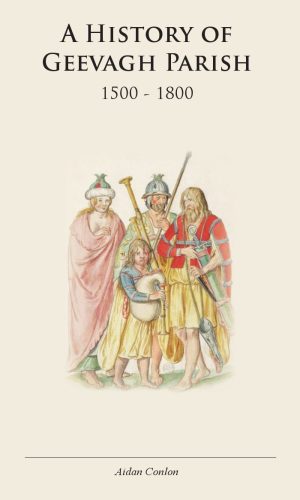
This Book escribes aspects of the way people in the Geevagh area lived during a period of great economic, social and political change in Ireland.

Graham Herterich, aka The Cupcake Bloke, has always been fascinated by taking classic Irish recipes and giving them a modern twist. By classic, he means bakes like soda bread, tarts, porter cake and brack all the way up to modern classics like jambons, cheesecakes and fifteens. In Bake: Traditional Irish Baking with Modern Twists, every recipe for a traditional bake is followed by a fresh new spin using the ingredients available in Ireland now, from advieh to zhug.
It may not be an exact update of the recipe – it could be a modern interpretation of the flavour combination or the concept, like a classic coffee and walnut cake reimagined as a coffee and walnut pavlova with coffee poached pears. Food is a powerful link to our past, so writing the book also became a trip down the memory lane of Graham’s childhood, teens and early twenties through to the last few years, when he became more confident in his food, flavours, inspirations and textures and realised that baking is more than just an action – it’s an invitation to the people you are going to share it with, a symbol of generosity and a gesture of love.
The Sligo Field Club Volume 8, 2022 is the latest issue of the hugely popular Sligo Field Club Journal.

Brendan Behan wrote over one hundred articles for Irish newspapers between 1951 and 1956 as he rose to international fame, with most of them written in a weekly column in the Irish Press. The articles reveal a serious writer capable of great comic set pieces and amusing yarns as well as thoughtful reflections on cultural and historical issues. They reflect his passion for working-class Dublin life and the history and folklore of the city, as well as his travels in Ireland and Europe.
This edition gathers all the articles and essays that Behan published in newspapers from 1951 to his death in 1964. Selections of Behan’s articles have been published since his death (Hold Your Hour and Have Another, 1965; After the Wake, 1981; The Dubbalin Man, 1997). However, there has been no complete edition of Behan’s prose, and no edition has provided a detailed biographical and literary introduction, explanatory notes and suggestions for further reading.
This volume is intended for publication during the centenary celebrations of Behan’s birth in 2023, with his birthday being 9 February.
An Ongoing Mission: this Journal will continue the ambition of Sligo Field Club, formerly Sligo Antiquarian Society, and now in its eightieth year, to protect Sligo’s rich archaeological and historical heritage. The Journal provides a platform for authors to record and analyse the rich heritage of Sligo and the greater North Connacht region across a wide range of topics.
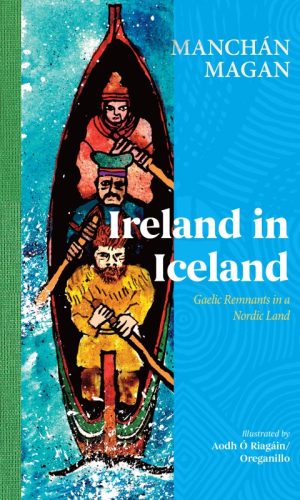
In this richly illustrated journey, Manchán Magan traces the forgotten presence of the Irish in Iceland; monks and migrants, storytellers and shapeshifters who helped shape a land we’ve long imagined as purely Norse.
Through language, lore, place names, DNA, and landscape, Magan uncovers the traces of Gaelic life woven through Iceland’s sagas and stones. With curiosity and care, this book reveals how two island nations, once deeply connected, share more than we’ve been taught to remember. Ireland in Iceland offers a new perspective on ancestry, belonging, and the lasting traces of culture carried across oceans.
Ireland in Iceland is the second in a series of illustrated books Manchán is publishing with Mayo Books Press, exploring cultural similarities and resonances between Ireland, India, Iceland, and the Aboriginal cultures of Australia. Ireland in Iceland is illustrated by Aodh Ó Riagáin/ Oreganillo.
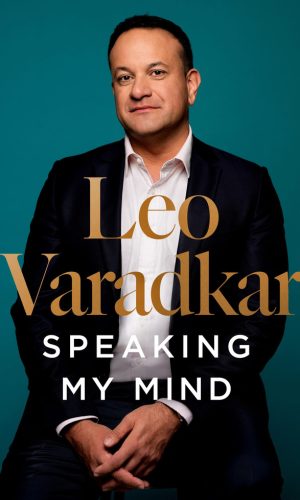
Leo Varadkar shares his fascinating experience as Irish prime minister at a time of much change and turbulence, in this remarkably honest memoir. Leo Varadkar was an unlikely Taoiseach – the youngest on taking office in 2017, the first Taoiseach to be gay, and the first person of colour to be Taoiseach. Equally unlikely was his decision to bow out of politics in his mid-forties.
Now, liberated from the constraints of office, he tells his fascinating story with characteristic courage and candour, and provides a unique insight into the formation and evolution of a senior politician. In Speaking My Mind Leo Varadkar shares his pride in helping to bring about transformational changes, such as marriage equality. He describes experiences that only a prime minister could have – speaking frankly to Pope Francis on the legacy of church abuses, connecting with Barack Obama about both being the ‘tall, dark guy with the funny name’, navigating challenges such as the pandemic and the fallout from Brexit.
And he writes honestly about the costs that go with the immense privilege of holding high office. Speaking My Mind is a revealing, intimate and important memoir from a singular public figure.
Robert Langdon is back in the long-awaited new race-against-time thriller from the global bestselling author of The Da Vinci Code and Angels and Demons. Accompanying celebrated academic, Katherine Solomon, to a lecture she’s been invited to give in Prague, Robert Langdon’s world spirals out of control when she disappears without trace from their hotel room. Far from home and well out of his comfort zone, Langdon must pit his wits against forces unknown to recover the woman he loves.
But Prague is an old and dangerous city, steeped in folklore and mystery. For over two thousand years, the tides of history have washed back and forth over it, leaving behind echoes of everything that has gone before. Little can Langdon know that he is being stalked by a spectre from that dark past.
He must use all of his arcane knowledge to decipher the world around him before he too is consumed by the rings of treachery and deception that have swallowed Katherine. Against a backdrop of vast castles, towering churches, graveyards buried twelve deep and labyrinthine underground passages, Langdon must navigate a shadow city hiding in plain sight, a city which has successfully kept its secrets for centuries and will not readily deliver them. This is a battlefield unlike any he has previously experienced, one on which he must fight not for his only life, but for the future of humanity itself.
The Secret Of Secrets is Dan Brown’s first novel for over eight years and sees the stunning return of Harvard symbologist Robert Langdon, this time pitting his wits against a conspiracy which will test even his considerable brainpower and take him to the edge of losing all that he holds dear…
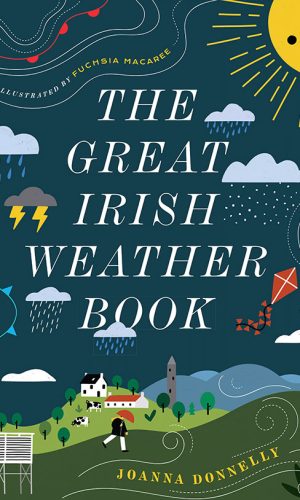
There’s nothing the Irish like more than talking about the weather!Here meteorologist Joanna Donnelly explains what weather is and how it happens. From cold fronts to climate change, satellites to storms, this book contains everything you’ve ever wanted to know about the weather. Beautifully illustrated by Fuchsia MacAree, and containing lots of interesting facts and experiments, this is a book that every curious child will love.
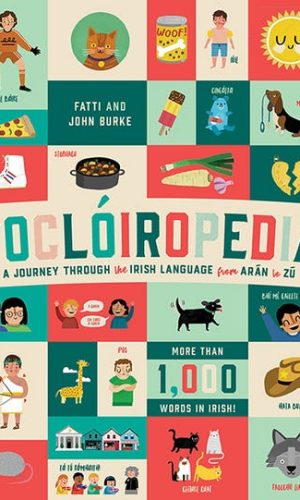
Focl?iropedia
This breathtakingly exciting book discovers the Irish language as you’ve never learned it before! Fatti Burke’s amazing illustrations and her father John’s fabulous teaching bring the language alive with every turn of the page. A visual introduction to Ireland’s language for young and old, you will learn your first thousand words, discover your culture and enjoy the fabulous quirks and features of your native tongue!Bringing a contemporary appeal to a classic subject, get ready to fall in love with your language. It’s Irish as you’ve never seen it before!This is the third book from the bestselling father and daughter duo behind Irelandopedia and Historopedia, which have sold over 100,000 copies.
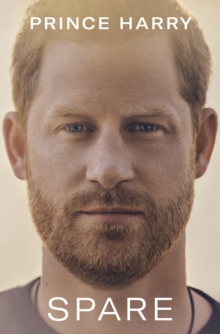
It was one of the most searing images of the twentieth century: two young boys, two princes, walking behind their mother’s coffin as the world watched in sorrow – and horror. As Diana, Princess of Wales, was laid to rest, billions wondered what the princes must be thinking and feeling – and how their lives would play out from that point on. For Harry, this is that story at last.
With its raw, unflinching honesty, Spare is a landmark publication full of insight, revelation, self-examination, and hard-won wisdom about the eternal power of love over grief. Prince Harry wishes to support British charities with donations from his proceeds from Spare. The Duke of Sussex has donated $1,500,000 to Sentebale, an organisation he founded with Prince Seeiso in their mothers’ legacies, which supports vulnerable children and young people in Lesotho and Botswana affected by HIV/AIDS.
Prince Harry will also donate to the non-profit organisation WellChild in the amount of GBP300,000. WellChild, which he has been Royal patron of for fifteen years, makes it possible for children and young people with complex health needs to be cared for at home instead of hospital, wherever possible.
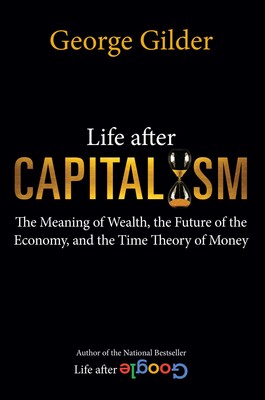
Author of national bestseller Life After Google and generation-defining Wealth and Poverty, venture capitalist, futurist, and pioneering thinker extraordinaire George Gilder pinpoints how the clash of creativity with power at the heart of economic systems leads to global cognitive dissonance and argues that the creation of the novel taps capitalism’s infinite promise and is humanity’s only path of escape from stagnation and tyranny. Gilder once more rocks the archetypes of modern information theory and economics with a paradigm-shifting salvo of sheer brilliance. The capitalist era is over-get ready for life after capitalism.
For more than two hundred years, capitalism spread wealth around the globe, bringing unprecedented prosperity and progress, liberating human potential. But something has gone terribly wrong in the world economy. Creativity and faith in the future-capitalism’s crucial ingredients-seem to have run out.
The elites think they can maintain a nation’s wealth by printing money and investing it in favored industries. Their trust in bureaucratic experts, their cautionary paranoia, and their delusional belief that they can “control” everything from the spread of a virus to the weather, are sucking the life out of the economy. Ordinary people, their freedoms restricted, their prospects dim, are losing their faith in their institutions.
Such misguided corporatism and pride, confusion and despair, are the result of a deep misunderstanding of capitalism itself. The bestselling futurist and venture capitalist George Gilder explains why economics is not an incentive system to be manipulated but an information system to be freed. Material resources are essentially as plentiful as the atoms of the universe.
What drives economic growth in a free market is our limitless human ingenuity and creativity. Prophetic, inspiring, and paradigm-shifting, Life after Capitalism is a once-in-a-generation classic.
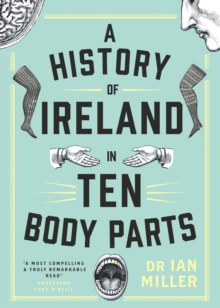
Skulls, heads, hands, height, legs, sex organs, blood, brains, stomachs, ears and corpses – discover Irish history through the prism of the body. From the brutal beheading of the 25-year-old, red-headed Clonycavan Man some 2,000 years ago, and the rich vein of information that has been preserved in his ‘bog body’, to the ancient skulls stolen from islands off Ireland’s west coast believed to be those of giants – here medical historian Dr Ian Miller brings readers on a uniquely entertaining journey through Irish history.
Encounter the famous scribes, including St Patrick, who preserved our knowledge of ancient Ireland by hand. Discover the fears of excessive tea drinking that were once such a great cause for concern on this isle. Meet the doctors who revolutionised Irish medicine in the 19th century – along with the gruesome bodysnatching that accompanied it. Here, fact and folklore intertwine to take you on a fascinating journey through Irish history as you’ve never experienced it before.
New York Times Bestselling Author. Millions of books sold worldwide! A Life-Changing Tool Millions of People Can’t Stop Talking About What if the key to happiness, success, and love was as simple as two words? If you’ve ever felt stuck, overwhelmed, or frustrated with where you are, the problem isn’t you. The problem is the power you give to other people.
Two simple words—Let Them—will set you free. Free from the opinions, drama, and judgments of others. Free from the exhausting cycle of trying to manage everything and everyone around you.