Showing 17–32 of 955 resultsSorted by price: low to high
-
€4.50
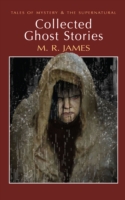
M.R. James is probably the finest ghost-story writer England has ever produced. These tales are not only classics of their genre, but are also superb examples of beautifully-paced understatement, convincing background and chilling terror.
As well as the preface, there is a fascinating tail-piece by M.R. James, ‘Stories I Have Tried To Write’, which accompanies these thirty tales. Among them are ‘Casting the Runes’, ‘Oh, Whistle and I’ll come to you, My Lad’, ‘The Tractate Middoth’, ‘The Ash Tree’ and ‘Canon Alberic’s Scrapbook’.
‘There are some authors one wishes one had never read in order to have the joy of reading them for the first time. For me, M.R. James is one of these’.
Ruth Rendell
-
€4.95
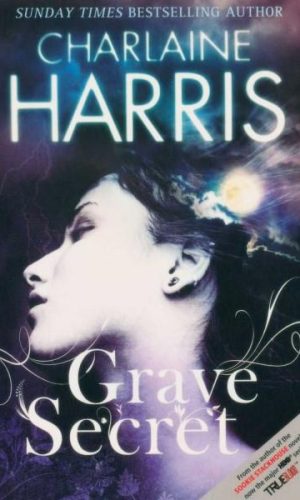
She can find dead people…but now someone wants her dead too.
-
€4.95
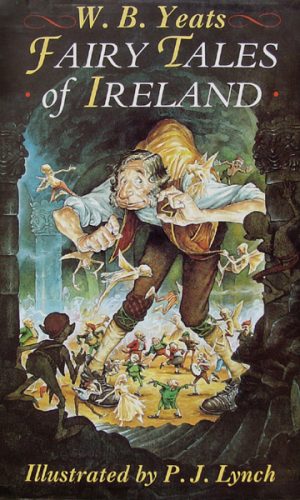
WB Yeat’s classic collection of Irish myths and legends, tales of witches, fairies, giants and people of the otherworld, draws on the glorious storytelling tradition of Ireland.
-
€4.99
A thoughtful, captivating and ultimately uplifting novel from this uniquely talented author. Jasmine loves two things: her sister and her work. And when her work is taken away she has no idea who she is.Matt loves two things: his family and the booze. Without them, he hits rock bottom.One New Year’s Eve, two people’s paths collide.
Both have time on their hands; both are at a crossroads. But as the year unfolds, through moonlit nights and suburban days, an unlikely friendship slowly starts to blossom.Sometimes you have to stop still in order to move on…Original and poignant, The Year I Met You will make you laugh, cry and celebrate life.
-
€5.00
A passionate story of the love between Catherine Earnshaw and Heathcliff, a foundling adopted by Catherine’s father. The story’s action is chaotic and violent, but the accomplished handling of a complex structure, the descriptions of the moorland setting and the poetic grandeur combined to make this novel a masterpiece of English literature.
-
€5.00
Gaskell’s last novel, widely considered her masterpiece, follows the fortunes of two families in nineteenth century rural England.? At its core are family relationships – father, daughter and step-mother, father and sons, father and step-daughter – all tested and strained by the romantic entanglements that ensue. Despite its underlying seriousness, the prevailing tone is one of comedy.? Gaskell vividly portrays the world of the late 1820s and the forces of change within it, and her vision is always humane and progressive. The story is full of acute observation and sympathetic character-study:? the feudal squire clinging to old values, his naturalist son welcoming the new world of science, the local doctor and his scheming second wife, the two girls brought together by their parent’s marriage…
-
€5.00
War and Peace is a vast epic centred on Napoleon’s war with Russia. While it expresses Tolstoy’s view that history is an inexorable process which man cannot influence, he peoples his great novel with a cast of over five hundred characters. Three of these, the artless and delightful Natasha Rostov, the world-weary Prince Andrew Bolkonsky and the idealistic Pierre Bezukhov illustrate Tolstoy’s philosophy in this novel of unquestioned mastery.
This translation is one which received Tolstoy’s approval.
-
€5.00
This novel is based on the author’s personal experience as a teacher in Brussels. It is a moving tale of repressed feelings and subjection to cruel circumstance and position, borne with heroic fortitude. It is also the story of a woman’s right to love and be loved.
Wordsworth Classics
-
€5.00
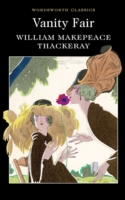
Thackeray’s upper-class Regency world is a noisy and jostling commercial fairground, predominantly driven by acquisitive greed and soulless materialism, in which the narrator himself plays a brilliantly versatile role as a serio-comic observer. Although subtitled A Novel without a Hero, Vanity Fair follows the fortunes of two contrasting but inter-linked lives: through the retiring Amelia Sedley and the brilliant Becky Sharp, Thackeray examines the position of women in an intensely exploitative male world.
-
€5.00
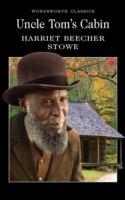
Uncle Tom’s Cabin is the most popular, influential and controversial book written by an American. Stowe’s rich, panoramic novel passionately dramatises why the whole of America is implicated in and responsible for the sin of slavery, and resoundingly concludes that only ‘repentance, justice and mercy’ will prevent the onset of ‘the wrath of Almighty God!’.
-
€5.00
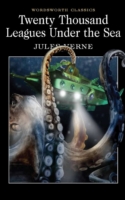
Professor Aronnax, his faithful servant, Conseil, and the Canadian harpooner, Ned Land, begin an extremely hazardous voyage to rid the seas of a little-known and terrifying sea monster. However, the ‘monster’ turns out to be the giant submarine, Nautilus, commanded by the mysterious Captain Nemo, by whom they are soon held captive. So begins not only one of the great adventure classics by Jules Verne, the ‘Father of Science Fiction’, but also a truly fantastic voyage from the lost city of Atlantis to the South Pole.
-
€5.00
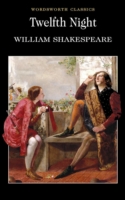
The gentle melancholy and lyrical atmosphere of Twelfth Night have long made the play a favourite with Shakespearian audiences. The plot revolves around mistaken identities and unrequited love, but is further enlivened by a comic sub-plot of considerable accomplishment. In it, Sir Toby Belch and his companion outwit the pretentious Malvolio, who despite suffering their most outrageous and insulting practical jokes, emerges as an almost noble figure.
-
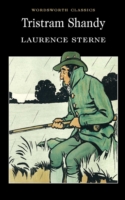
€5.00
Laurence Sterne’s The Life and Opinions of Tristram Shandy, Gentleman is a huge literary paradox, for it is both a novel and an anti-novel. As a comic novel replete with bawdy humour and generous sentiments, it introduces us to a vivid group of memorable characters, variously eccentric, farcical and endearing. As an anti-novel, it is a deliberately tantalising and exuberantly egoistic work, ostentatiously digressive, involving the reader in the labyrinthine creation of a purported autobiography.
This mercurial eighteenth-century text thus anticipates modernism and postmodernism. Vibrant and bizarre, Tristram Shandy provides an unforgettable experience. We may see why Nietzsche termed Sterne ‘the most liberated spirit of all time’.
-
-
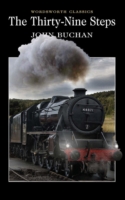
€5.00
Richard Hannay finds a corpse in his flat, and becomes involved in a plot by spies to precipitate war and subvert British naval power. The resourceful victim of a manhunt, he is pursued by both the police and the ruthless conspirators. The Thirty-Nine Steps is a seminal ‘chase’ thriller, rapid and vivid.
It has been widely influential and frequently dramatised: the film directed by Alfred Hitchcock became a screen classic. This engaging novel also provides insights into the inter-action of patriotism, fear and prejudice.
-
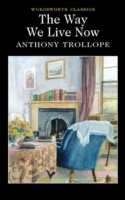
€5.00
The tough-mindedness of the social satire in and its air of palpable integrity give this novel a special place in Anthony Trollope’s Literary career. Trollope paints a picture as panoramic as his title promises, of the life of 1870s London, the loves of those drawn to and through the city, and the career of Augustus Melmotte. Melmotte is one of the Victorian novel’s greatest and strangest creations, and is an achievement undimmed by the passage of time.
Trollope’s ‘Now’ might, in the twenty-first century, look like some distant disenchanted ‘Then’, but this is still the yesterday which we must understand in order to make proper sense of our today.