The Lecher Antenna
€40.00Paperback. This is Part 2 which is a Lecher Antenna Practical Guide and is an elaborate traning course in geobiology and bio-energy which will enable the reader to make their own Lecher antenna measurements. . . . .

Showing 1073–1088 of 1090 resultsSorted by price: low to high

Paperback. This is Part 2 which is a Lecher Antenna Practical Guide and is an elaborate traning course in geobiology and bio-energy which will enable the reader to make their own Lecher antenna measurements. . . . .

Butter Boy is the complete collection of all 152 articles and over 450 recipes from Paul Flynn’s tenure as food writer for the Irish Times from November 2019 to October 2022. Paul’s columns also chronicled what turned out to be the three most unusual and challenging years of our lives, when cooking and mealtimes took on new meaning.
Paul’s food is simple, seasonal and family-oriented. It’s designed to give comfort at any time of year because after a hard day, cooking dinner can be soothing and eating it can be comforting. Afterwards, the world feels just that little bit better.
Warm, witty and laugh-out-loud funny, reading and cooking from Butter Boy is like spending time in the kitchen with an old friend.
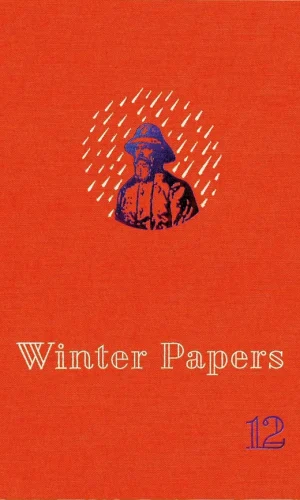
Vol 12 of Winter Papers Ireland’s annual arts anthology is published
by Curlew Editions.
Contributors and interviewees
Ayesha Ahmad · Eimear Arthur · Jill Beecher · Sarah Byrne · Mary Costello · Sarah Davis-Goff · Jonny Dillon · Naoise Dolan · Isadora Epstein · Gareth Evans · Simon Ewing · Michael Hill · Conor Horgan · Siobhán Kane · Joanne Laws · Alice Maher · Seán Mac Erlaine · Tim MacGabhann · Tara McEvoy · Eamon McGuinness · Kathleen McLaughlin · Rebecca O’Brien · Peter Murphy · Michael Phoenix · Steve Pyke · Declan Ryan · Charlotte Sinclair · Tenaya Steed · Emily Waszak · Clair Wills
Winter Papers Vol. 12 is a 192pp cloth-covered, thread-sewn hardback book. The cover is hand-finished with coloured foil blocking and the pages are printed on 120gsm Munken Pure.
Dimensions are 205mm × 280mm × 20mm.
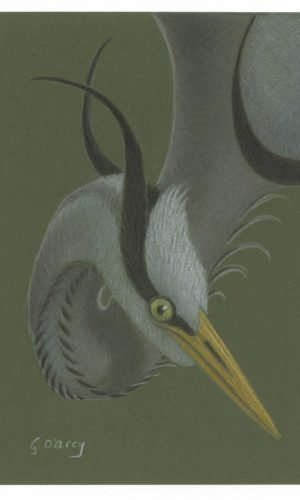
Birdstyle is a striking compendium of over 100 familiar Irish birds, combining the rigours of science with the imagination of art.
Unapologetically imaginative and beautifully currated, Birdstyle is the ultimate tribute to Irish nature for the modern collector and bird lover.

A Times Literary Supplement , Telegraph and Financial Times Best Book of 2025’The glorious gathering-in of his achievement that is The Poems of Seamus Heaney, edited with meticulous care and luminous clarity. . .
allows us for the first time to see his dozen formal collections as only the most visible peaks in a constantly rolling range of creativity.’ Fintan O’Toole, Observer’This book is a landmark. [and] lets us see Heaney’s work, whose ripples we are still learning to navigate, for the colossal achievement it is, and it reminds us that Heaney is not only a keeper but an enricher of the word-hoard.’ Philip Terry, GuardianThis is the long-awaited, definitive edition of Seamus Heaney’s poetry. It encompasses all the poems Heaney published in his lifetime as well as the small number that appeared after his death: twelve single volumes, from Death of a Naturalist (1966) to Human Chain (2010), and those poems published in pamphlets, journals and magazines or with limited circulation.
In addition, the book includes a selection of unpublished material chosen by the poet’s family. It is a body of work that, in its entirety, resounds with the ‘lyrical beauty and ethical depth’ cited by the Nobel committee: poems ‘which exalt everyday miracles and the living past.’Critical introductions to each collection and notes that illuminate the history and development of the poems make this the essential volume for admirers of Heaney’s work. ‘Heaney’s voice, by turns mythological and journalistic, rural and sophisticated, reminiscent and impatient, stern and yielding, curt and expansive, is one of a suppleness almost equal to consciousness itself.’ Helen Vendler’More than any other poet since Wordsworth he can make us understand that the outside world is not outside, but what we are made of.’ John Carey’His is “closeup” poetry – close up to thought, to the world, to the emotions.

Written by Shane Bisgood. Both an instruction book and also an indispensable guide to shotgun shooting… Whether you are experienced or a complete novice this book gives Knowledge found within it is Method, simply learnt, completely logical and delightfully effective. Combine that with advice on legal matters, maintenance, good practice, suitable ammunition, suitable firearms and at least one address for a tailor! “I was so delighted upon unwrapping your wonderful book and just kept telling myself I would write you as soon as I finished reading it. What an amazing shot gunners book. In all honesty, I don’t feel there has ever been one written that can hold a candle to yours. Your method/s of teaching far exceed that of any shotgun instruction to be found. You have a unique (and gifted) manner of making everything so “understandable” be it a novice or an accomplished shooter such as myself.” Gary Faules, USA, who still holds records as a former Olympic skeet shooter.

Celebrating 40 years of the Ballymaloe Cookery SchoolWinner – Gourmand World Cookbook Awards: Best World Gourmand Cookbook 2017Growing your own food is exciting but, when it comes to knowing how to make the most of your produce, it can be daunting. In Grow, Cook, Nourish, bestselling author Darina Allen draws on more than 30 years of experience gardening at Ballymaloe to take you through an extensive list of vegetables, herbs and fruits. Each entry includes explanations of different varieties, practical information on cultivation, growing and maintenance, plus instructions for the best ways to cook produce as well as preserve and utilise a glut.
With more than 500 recipes, including dishes for every ingredient, Darina shows how to use your harvest to its full potential. Vegetables range from annual crops such as chicory, radishes and kohlrabi to perennials like asparagus and spinach. Fruits cover apples, currants and peaches as well as the more unusual and interesting myrtle berries, loquats and medlars.
Plus a comprehensive list of herbs, edible flowers and foraged foods such as samphire, wild garlic and blackberries.
Every now and again I need to get down here, to get into the Diogenes tub, as it were, or the Colmcille beehive hut, or the Mossbawn scullery. At any rate, a hedge surrounds me, the blackbird calls, the soul settles for an hour or two . . .
For all his public eminence, Seamus Heaney seems never to have lost the compelling need to write personal letters. In this ample but discriminating selection from fifty years of his correspondence, we are given access as never before to the life and poetic development of a literary titan – from his early days in Belfast, through his controversial decision to settle in the Republic, to the gradual broadening of horizons that culminated in the award of a Nobel Prize and the years of international acclaim that kept him heroically busy until his death.
Editor Christopher Reid draws from both public and private archives to reveal this story in the poet’s own words. Generous, funny, exuberant, confiding, irreverent, empathetic and deeply thoughtful, the letters encompass decades-long relationships with friends and colleagues, as well as showing an unstinted responsiveness to passing acquaintances. Moreover, Heaney’s joyous mastery of language is as evident here as it is in any of his writing for a literary readership.
Listening to Heaney’s voice, we find ourselves in the same room as a man whose presence, when he lived, enriched the world immeasurably, and whose legacy continues to deepen our sense of what truly matters.
A brutal Civil War erupted across Ireland in June 1922. The IRA, in opposition to the development of a pro-Treaty government, returned to the familiar guerrilla tactics of the War of Independence. Hundreds of dugouts constructed in rural settings were key to the IRA campaign.
These secret places offered safe shelter to men on the run, while also allowing for supplies and arms to be stored and prisoners held. Tormore Cave, high in the mountains of County Sligo, in the northwest of Ireland, was one such dugout. Over 30 Republican men sought refuge there for six weeks in September and October 1922.
Like most dugouts, Tormore Cave was never mentioned in historical accounts or documentary sources, but its significance was remembered locally. Archaeological excavations conducted on the centenary of its occupation revealed the extensive modifications that had transformed this natural limestone cave into a habitable military dugout, a crucial refuge for combatants whose comrades had been executed or arrested by Government forces. The historical artefacts and environmental material recovered during the excavations, combined with detailed archaeological surveys and analyses, provide a fascinating insight into the conditions endured by those billeted there.
The lives of the men and women directly associated with the cave dugout are explored, including an in-depth study of IRA General Officer Commanding Billy Pilkington – a key figure during the Irish revolutionary period who has, until now, been largely overlooked. An Irish Civil War Dugout: Tormore Cave, County Sligo adopts a multidisciplinary approach, the first of its kind in an Irish context, combining archaeology, local and military histories, family memories, community recollections, and landscape studies. This groundbreaking study – the first archaeological excavation of a Civil War site in Ireland, facilitates a wider discussion of the role of dugouts in guerrilla warfare.
By focussing in detail on one site at a local level, this book provides a unique and valuable contribution to the Irish revolutionary period on a regional and national scale.

This major illustrated study investigates farmhouse and cabin furniture from all over the island of Ireland. It discusses the origins and evolution of useful objects, what materials were used and why, and how furniture made for small spaces, often with renewable elements, was innate and expected. Encompassing three centuries, it illuminates a way of life that has almost vanished. It contributes as much to our knowledge of Ireland’s cultural history as to its history of furniture. …
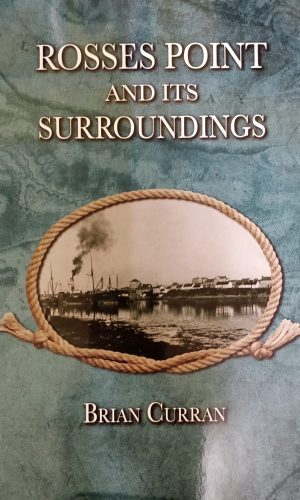
Rosses Point and Its Surroundings is an illustrated history of one of Sligo’s most celebrated coastal areas spanning centuries, from the early Christian period to the land confiscations of the 17th century, the development of shipping and other maritime industries.
It details the evolution of Rosses Point village from a traditional clachan settlement to a fashionable ‘watering place’ in the 19th century, examines the history of education on the peninsula.
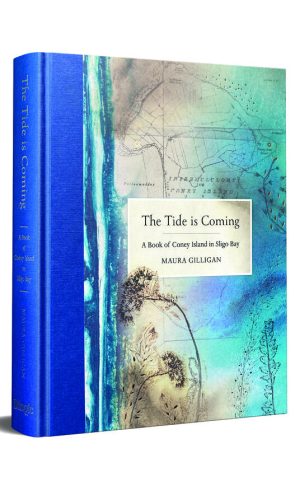
The Tide is Coming – a book of Coney Island in Sligo Bay by Maura Gilligan –
is a beautiful limited-edition publication containing prose, poetry, interviews, photographs
and artwork.
As the title of this book suggests, the rhythm of the tides has, for centuries, dictated the
rhythm of life on Coney Island. During his lifetime, Islander John McGowan called out the
warning “the tide is coming” countless times, ensuring that visitors would cross the causeway
safely before channels at either side closed the strand passage and made an island of his
shores.
This little island is said to have given its name to Coney Island in New York! Its ancient
name, Inismulclohy, can be found in maps, records and annals.
Contents
Insightful poetry and prose reflect the author’s thoughts as she moves across the Island in
space and time.
Author-transcribed interviews with Island elder John McGowan form an integral part of this
book, illuminating eight decades of life in a place inhabited by John’s ancestors since 1789.
There are echoes here of life on other offshore Irish islands, now uninhabited.
Photographer James Fraher’s haunting black and white images, together with Catherine
Fanning’s remarkable paintings, prints and line drawings, add visual depth and magic.
Special Features
The book itself is a work of art; a striking hardback cover collage is enhanced by timeless
quarter binding, head and tail bands, marker ribbon and rich-coloured endpapers. Sumptuous
Munken paper provides the perfect backdrop for superb illustrations and exceptional writing.
Folded within the pages of this book is a surprise – an A3 loose-leaf ‘Map of Coney Island in
Sligo Bay’, which can be framed. Created from an old and fragile line-drawn original, the
current version of this map illustrates locations on and around the Island, some of which still
carry their original Irish names.
The Tide is Coming is a wonderful history of an Irish island and a perfect gift.

Fleadh Cheoil na hEireann – Musicians and Senior Ceili Band Winners 1951-2021
Philip Duffy is uniquely qualified to perform this invaluable task of chronicling the history of ceili bands. His own musical ability, his longstanding involvement in ceili bands, his vast experience of performance in Fleadh Cheoil na hEireann, and his deep understanding of the traditional music community at home and abroad all contribute to the depth and empathy of this book.
‘On the Night’ will be enjoyed by many different readers – the family member who wants to learn about their sibling or parent or relation who played with a band from the beginning; the local music enthusiast tracing the evolution of their favourite ceili band; the student of ethnomusicology intent on working out the origins and development of ceili music performance and competition; and the current ceili band members seeking to understand the heritage that has been handed down to them and who now play their own part in gifting this unique native art form on to the next generation.
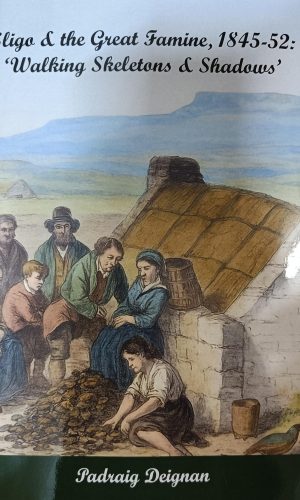
Sligo offers a unique setting for a study of the Great Famine and the book investigates the period from the first appearance of the blight to the immediate aftermath. The shifting, inept and often heartless government policies reflected different attitudes to famine relief and this impacted on the people in a very direct and often catastrophic way.
Sligo experienced considerable death and emigration in the years from 1845 to 1852; the second worst affected county in the country after Mayo, losing a third of its population in just a few short years. The reaction of local landlords and landholders to the suffering was also varied and the study explored the lengths to which the Famine offered an opportunity to some landlords to impose long-term policies on their estates.
Padraig Deignan has previously published ‘The Protestant Community in Sligo, 1914-49’ in 2010, ‘Land and People in Nineteenth Century Sligo: from Union to Local Government’ in 2015 and ‘Sligo in the Eighteenth Century’ in 2021.

The Atlas of the Irish Revolution is a landmark publication that presents scholarship on the revolutionary period in a uniquely accessible manner. Featuring over 200 original maps and 300 images, the Atlas includes 120 contributions by leading scholars from a range of disciplines. They offer multiple perspectives on the pivotal years from the 1912 Home Rule crisis to the end of the Irish Civil War in 1923
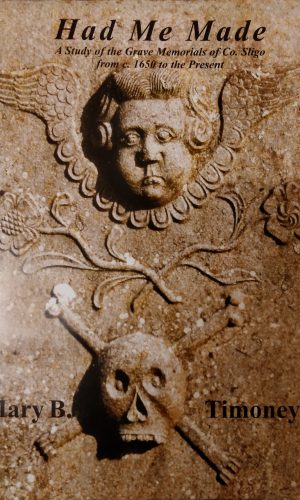
A Study of the Grave Memorials of Co. Sligo from c. 1650 to the present.
284 pages : illustrations (some color), map, portraits