Clockwork Princess
€9.50CLARE, CASSANDRA

Showing 321–336 of 2004 resultsSorted by latest

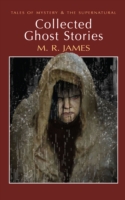
M.R. James is probably the finest ghost-story writer England has ever produced. These tales are not only classics of their genre, but are also superb examples of beautifully-paced understatement, convincing background and chilling terror.
As well as the preface, there is a fascinating tail-piece by M.R. James, ‘Stories I Have Tried To Write’, which accompanies these thirty tales. Among them are ‘Casting the Runes’, ‘Oh, Whistle and I’ll come to you, My Lad’, ‘The Tractate Middoth’, ‘The Ash Tree’ and ‘Canon Alberic’s Scrapbook’.
‘There are some authors one wishes one had never read in order to have the joy of reading them for the first time. For me, M.R. James is one of these’.
Ruth Rendell
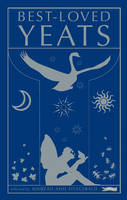

This volume includes all of Yeats’s published poetry, from the hauntingly beautiful early lyrics by which he is still best remembered, to the later work which some argue put beyond question his status as one of the foremost poets of his age.
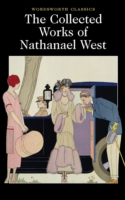
The four novels gathered here constitute the complete longer works of one the most brilliant and original American writers. West’s vision of American modernity is terrifyingly comical and diagnoses the tawdriness and meretriciousness of much of American popular culture. His greatest work, Miss Lonelyhearts, which begins this collection, is unique in modern literature.
It describes New York in the early years of the Great Depression through the point of view of an ‘agony aunt’ who corresponds with his suffering readers in the guise of ‘Miss Lonelyhearts: (Are you in trouble? – Do you need advice?)’. A Cool Million is, as its subtitle suggests, the ‘dismantling’ of a myth, here a caustic satire of the ‘rags to riches’ story. West’s final novel, The Day of the Locust, is a comic, yet apocalyptic account of the fantasies of 1930s Hollywood.
This volume concludes with West’s parodic and surreal first venture into fiction, The Dream Life of Balso Snell. Henry Claridge’s introduction to this new edition of West’s fictional writings contextualises his work in the United States of the Great Depression, in his evocation of 1930s Hollywood (where he worked as a writer of screenplays), and in the larger context of his Eastern European Jewish background, and, particularly, his reading of Dostoyesvky. The text comes with extensive annotations, a note on the textual history of West’s writings, and a guide to further reading for both the student and the general reader.