TRUMPET MAJOR
€5.00HARDY, THOMAS

Showing 1841–1856 of 2004 resultsSorted by latest


The gentle melancholy and lyrical atmosphere of Twelfth Night have long made the play a favourite with Shakespearian audiences. The plot revolves around mistaken identities and unrequited love, but is further enlivened by a comic sub-plot of considerable accomplishment. In it, Sir Toby Belch and his companion outwit the pretentious Malvolio, who despite suffering their most outrageous and insulting practical jokes, emerges as an almost noble figure.
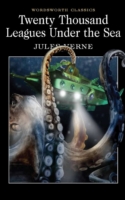
Professor Aronnax, his faithful servant, Conseil, and the Canadian harpooner, Ned Land, begin an extremely hazardous voyage to rid the seas of a little-known and terrifying sea monster. However, the ‘monster’ turns out to be the giant submarine, Nautilus, commanded by the mysterious Captain Nemo, by whom they are soon held captive. So begins not only one of the great adventure classics by Jules Verne, the ‘Father of Science Fiction’, but also a truly fantastic voyage from the lost city of Atlantis to the South Pole.

The three works in this collection, all dating from Nietzsche’s last lucid months, show him at his moststimulating and controversial: the portentous utterances of the prophet (together with the ill-defined figure of the Ubermensch) are forsaken, as wit, exuberance and dazzling insights predominate, forcing the reader to face unpalatable insights and to rethink every commonly accepted ‘truth’. Thinking with Nietzsche, in Jaspers’ words, means holding one’s own against him, and we are indeed refreshed and challenged by the vortex of his thoughts, by concepts which test and probe. In The Twilight of the Idols, The Antichrist and Ecce Homo Nietzsche writes at breakneck speed of his provenance, his adversaries and his hopes for mankind; the books are largely epigrammatic and aphoristic, allowing this poet-philosopher to bewilder and fascinate us with their strangeness and their daring.
He who fights with monsters, Nietzsche once told us, should look to it that he himself does not become one, and when you gaze long into an abyss the abyss also gazes into you. Reader, beware.