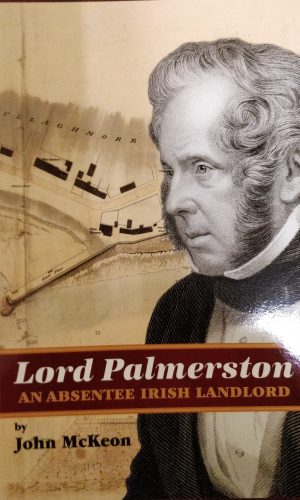
Lord Palmerston
€12.95MCKEON, JOHN

Showing 17–32 of 39 results
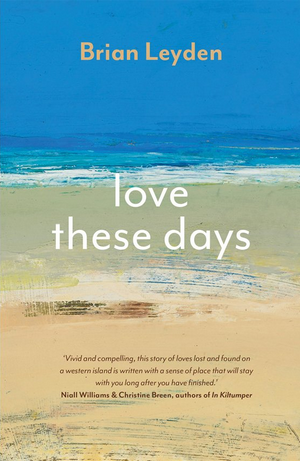
Only love will save us … Tara Leonard returns after seven years abroad as a humanitarian aid worker to the island where she grew up on the northwest coast of Sligo. Having fled Creevy Island after a wounding marital breakup, she is back only to finalise her divorce. But as her stay on Creevy unexpectedly lengthens, events build to a dangerous reckoning where every ounce of her resourcefulness is tested.
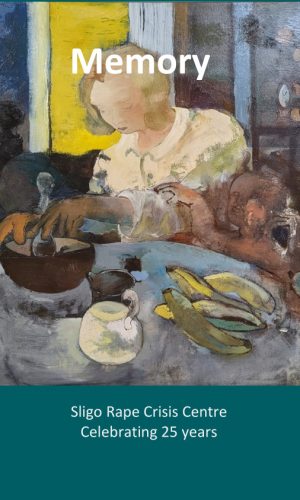
The Sligo Rape Crisis Centre deals with some of the most
difficult things that can happen to anyone. The trauma of
intimate violence can shake a person’s experience of being
to the core. The work of exploring this experience with a
view to living in a more comfortable way is a deeply healing
process. The therapist is there, present, as an authentic
witness. They can offer reflections on thoughts, feeling and
sensations, observed behaviours, expressions, and help
access the journey towards recovery.
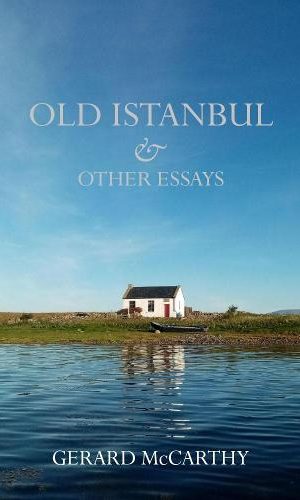
This is the first book of essays by a major new Irish non-fiction writer from the West of Ireland, comparable to the celebrated Kilkenny essayist Hubert Butler first published by The Lilliput Press and subsequently widely acclaimed. McCarthy’s writing is no less distinguished than Butler’s.
Gerard McCarthy writes of the extraordinarily subtle mix of his essays: “Perhaps the Philosophers who had the most enduring influence on me were the contrary figures of Nietzsche and Marcus Aurelius. The reading of each was an antidote to the other, but I was drawn to both by an instinctive affinity. They were augmented subsequently by the gargantuan figure of Michel de Montaigne. My interest has continued to be in the region where Philosophy merges into Literature, with a preference for a language of metaphor rather than of abstract reasoning.”
McCarthy continues: “These eight essays were written over the course of more than a decade. The fact that they have all been published in the one place, by the good offices of Irish Pages, has allowed me see the continuity between them, and to hope that they might be seen by the reader to form a unity.”
ABOUT THE AUTHOR
Gerard McCarthy (1949-2022) was born and reared in Dublin, and spent most of his adult life in Sligo, where he worked as social worker. He studied Philosophy at University College Dublin, with an early interest in Nietzsche and Marcus Aurelius, augmented subsequently by Michel de Montaigne. His first published essays – now collected here – have all appeared in issues of Irish Pages: A Journal of Contemporary Writing. He divided his time between his Sligo residence, an old schoolhouse on Collanmore Island in Clew Bay, and various travels to the Mediterranean and other peripheries of Europe. Old Istanbul & Other Essays was his first book.
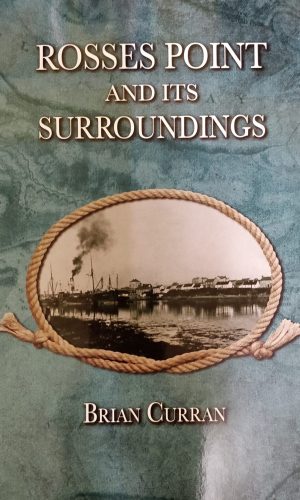
Rosses Point and Its Surroundings is an illustrated history of one of Sligo’s most celebrated coastal areas spanning centuries, from the early Christian period to the land confiscations of the 17th century, the development of shipping and other maritime industries.
It details the evolution of Rosses Point village from a traditional clachan settlement to a fashionable ‘watering place’ in the 19th century, examines the history of education on the peninsula.
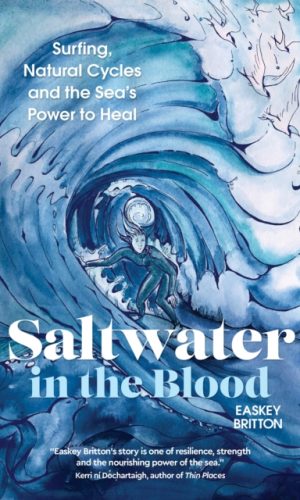
This is an incredibly inspiring exploration of the sea’s role in the wellness of people and the planet, beautifully written by Easkey Britton – surfer, scientist and social activist. She offers a powerful female perspective on the sea and surfing, explaining what it’s like to be a woman in a man’s world and how she promoted the sport to women in Iran, surfing while wearing a hijab. She speaks of the undiscussed taboo around entering the water while menstruating – and of how she has come to celebrate her own bodily cycles.
She has developed her own approach to surfing, which instead of seeking to dominate the waves, works in tune with the natural cycles of her body, the moon and the seasons. In a society that rewards busyness, she believes that understanding the influence of cycles becomes even more important – and we all have them, men and women. For Easkey, the sea is a source of mental and physical wellbeing.
She explores the mental toughness needed in big-wave surfing, and presents surfing as an embodied mindfulness practice in which we can find flow and connect with the movement of the waves. She stresses the need to recognize the ocean as our most powerful ally when addressing our greatest global challenge: the climate crisis. Above all, Easkey’s relationship to the sea has taught her about the need to meet life and evolve with it, rather than seeking to control it.
By such wisdom our planet might just survive and thrive.
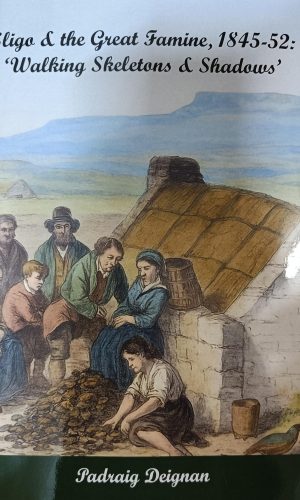
Sligo offers a unique setting for a study of the Great Famine and the book investigates the period from the first appearance of the blight to the immediate aftermath. The shifting, inept and often heartless government policies reflected different attitudes to famine relief and this impacted on the people in a very direct and often catastrophic way.
Sligo experienced considerable death and emigration in the years from 1845 to 1852; the second worst affected county in the country after Mayo, losing a third of its population in just a few short years. The reaction of local landlords and landholders to the suffering was also varied and the study explored the lengths to which the Famine offered an opportunity to some landlords to impose long-term policies on their estates.
Padraig Deignan has previously published ‘The Protestant Community in Sligo, 1914-49’ in 2010, ‘Land and People in Nineteenth Century Sligo: from Union to Local Government’ in 2015 and ‘Sligo in the Eighteenth Century’ in 2021.
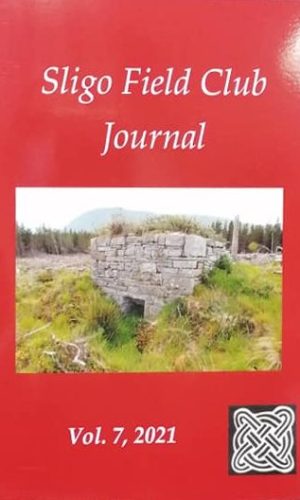
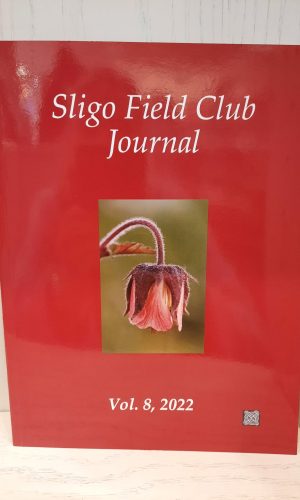
The Sligo Field Club Volume 8, 2022 is the latest issue of the hugely popular Sligo Field Club Journal.
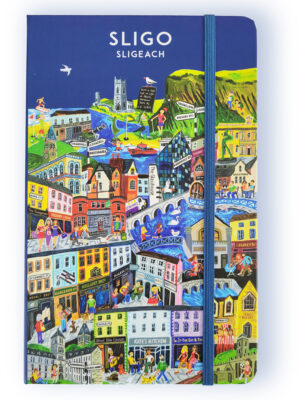
A5 hard back notebook featuring Sligo town. Elastic band closure and matching satin ribbon book marker compliment the design by Simone Walsh’s original painting. The inner covers are printed with an an acorn design and the thought evoking quote: “Mighty Oaks from Little Acorns Grow!
14cm x 21cm. 160 eco friendly lined acid free pages. Recyclable.
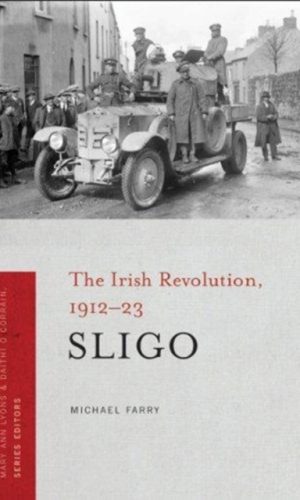
Using a wide array of sources and interviews, Michael Farry has produced a balanced, comprehensive and absorbing study of county Sligo from 1912 when the Irish Party controlled all political affairs to 1922–3 when the county saw considerable action during the civil war. This wide-ranging study offers fascinating new insights into the Irish Revolution and details how the county moved from being one of the most loyal to the Irish Party to one of the best-organised Sinn Féin counties. Farry is especially good on how both organised unionism and the strong labour movement in Sligo reacted to the rise of Sinn Féin, its election victory in 1918 and the subsequent Truce, Treaty and civil war. His use of the recently released BMH accounts as well as British military sources results in a richly detailed examination of the IRA campaign and the British reaction. It examines the superior attitude of the IRA towards ‘mere politicians’ during the Truce period and explains why Sligo saw so much conflict during the civil war.
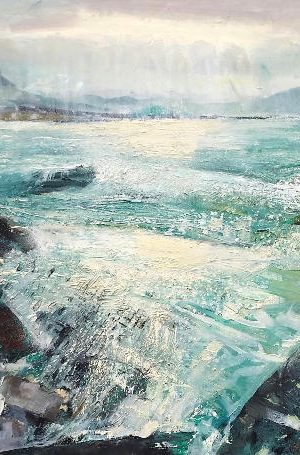
Belfast-born artist Neal Greig studied fine art to postgraduate level at Edinburgh College of Art. He has had one-man shows around Ireland and America. His work is in public and private collections and has drawn support from grant-awarding bodies including the Arts Council and the Pollock-Krasner Foundation.
Neal has two studios: one in a barn next to his farmhouse on the edge of the Castle Leslie estate in Glaslough, County Monaghan, and the Bath House Studio on Coney Island in County Sligo. He paints in the open air and offers painting workshops at both studios.
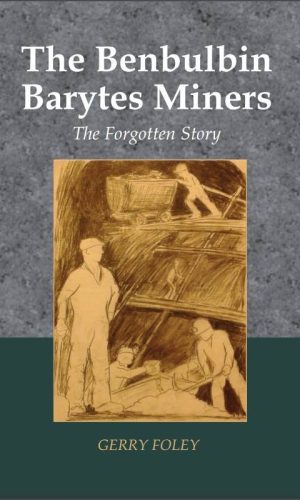
This book is a collection of stories of some of the men who worked in the Benbulbin mines from 1905 until all operations finally ceased in 1979. The stories were collected by the author, via audio recordings, podcasts, interviews, newspaper reports and personal documents belonging to some of the Barytes men. These stories are an important part of our heritage, in particular our industrial heritage and are worthy of recording for the education of future generations.

Join Chip and Birdy on their fun adventure in the land of Friends and Fairways. Greenskeeper Bill has called the golf rangers, as a mole has been digging and the course is in danger! This well trusted team has arrived at the scene, to find the mole and save the greens!
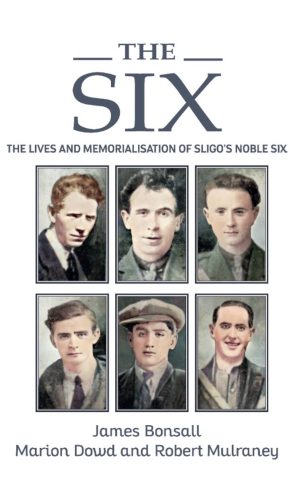
It is September, 1922. As the National Army closes in on the anti-Treaty stronghold of Rahelly House in North Sligo, 120 Republicans of the 3rd Western Division abandon their headquarters and retreat to the mountains. En route to a cave hideout in the uplands, six of the men are surrounded and captured. They would not survive one of the most brutal advances of the new Free State Army. Their deaths caused outrage and bewilderment across the county and essentially marked the end of the Civil War in Sligo. These men came to be memorialised as Sligo’s Noble Six.
This book looks beyone the well-documented accounts of the execution of Sligo’s Noble Six and explores the interwoven stories of their lives, their communities, their families, and their descendants. The men’s lives are illustrated through military archives, IRA dispatches, contemporary media coverage, and previously unpublished photos. Their memorialisation through poetry and prose, monuments and gatherings, has ensured that these six men live beyond the tragedy of their deaths.