Showing 1–16 of 38 resultsSorted by popularity
-
€30.00
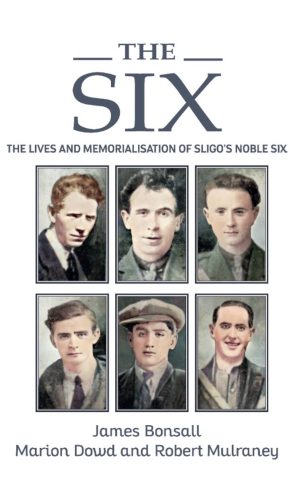
It is September, 1922. As the National Army closes in on the anti-Treaty stronghold of Rahelly House in North Sligo, 120 Republicans of the 3rd Western Division abandon their headquarters and retreat to the mountains. En route to a cave hideout in the uplands, six of the men are surrounded and captured. They would not survive one of the most brutal advances of the new Free State Army. Their deaths caused outrage and bewilderment across the county and essentially marked the end of the Civil War in Sligo. These men came to be memorialised as Sligo’s Noble Six.
This book looks beyone the well-documented accounts of the execution of Sligo’s Noble Six and explores the interwoven stories of their lives, their communities, their families, and their descendants. The men’s lives are illustrated through military archives, IRA dispatches, contemporary media coverage, and previously unpublished photos. Their memorialisation through poetry and prose, monuments and gatherings, has ensured that these six men live beyond the tragedy of their deaths.
-
€50.00
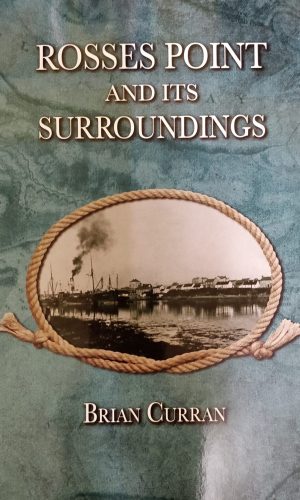
Rosses Point and Its Surroundings is an illustrated history of one of Sligo’s most celebrated coastal areas spanning centuries, from the early Christian period to the land confiscations of the 17th century, the development of shipping and other maritime industries.
It details the evolution of Rosses Point village from a traditional clachan settlement to a fashionable ‘watering place’ in the 19th century, examines the history of education on the peninsula.
-
€10.95
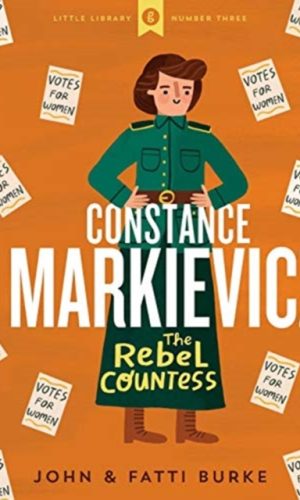
The third book in the Little Library series. When your collection is complete, you’ll have a little library – and big knowledge!
Discover the REVOLUTIONARY that was CONSTANCE MARKIEVICZ!Constance Markievicz grew up in Co. Sligo in the late 1800s with a dream: she wanted Ireland to become free and the people to be treated fairly.
She spent her life working to make these things happen. With rebellion in the air, she was asked for advice on how a lady should dress. Her answer? ‘Dress suitably in short skirts and strong boots, leave your jewels in the bank and buy a revolver.’ And the Easter Rising began …
-
€12.00
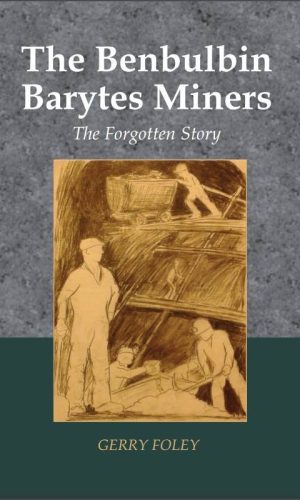
This book is a collection of stories of some of the men who worked in the Benbulbin mines from 1905 until all operations finally ceased in 1979. The stories were collected by the author, via audio recordings, podcasts, interviews, newspaper reports and personal documents belonging to some of the Barytes men. These stories are an important part of our heritage, in particular our industrial heritage and are worthy of recording for the education of future generations.
-
€25.00
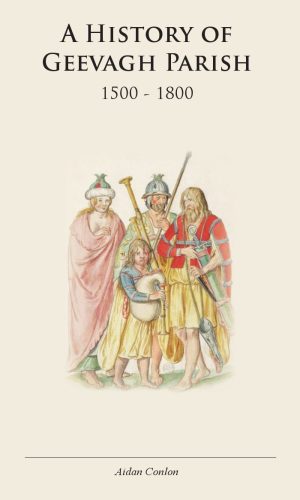
This Book escribes aspects of the way people in the Geevagh area lived during a period of great economic, social and political change in Ireland.
-
€25.00
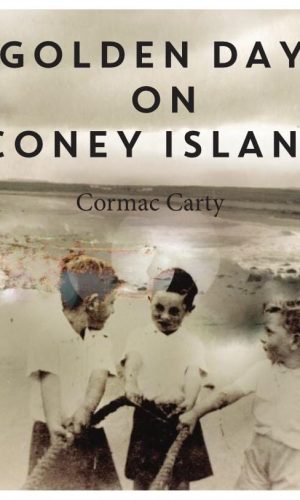
Cormac Carty lived on the island from 1945 till 1953 and his memories of those simpler times have now been printed posthumously, following Cormac’s death.
The book is almost like a collection of short stories which covers everything from starting school to journeys on a horse from the island to Knocknarea or bringing cattle to the fair.
Normally, bringing cattle would be a straightforward operation but bringing cows from Coney Island to a fair was nothing short of a very dangerous task.”
“Back then it (the island) was completely isolated and Cormac would have gone into Sligo town once a week to do the shopping and selling things he would have picked ‘The Champion’ up and without fail from cover to cover it would be read out and everyone would be listening for all the news.”
-
€50.00
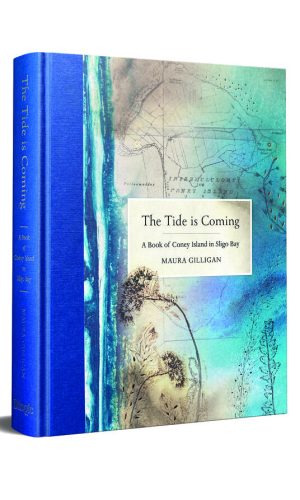
The Tide is Coming – a book of Coney Island in Sligo Bay by Maura Gilligan –
is a beautiful limited-edition publication containing prose, poetry, interviews, photographs
and artwork.
As the title of this book suggests, the rhythm of the tides has, for centuries, dictated the
rhythm of life on Coney Island. During his lifetime, Islander John McGowan called out the
warning “the tide is coming” countless times, ensuring that visitors would cross the causeway
safely before channels at either side closed the strand passage and made an island of his
shores.
This little island is said to have given its name to Coney Island in New York! Its ancient
name, Inismulclohy, can be found in maps, records and annals.
Contents
Insightful poetry and prose reflect the author’s thoughts as she moves across the Island in
space and time.
Author-transcribed interviews with Island elder John McGowan form an integral part of this
book, illuminating eight decades of life in a place inhabited by John’s ancestors since 1789.
There are echoes here of life on other offshore Irish islands, now uninhabited.
Photographer James Fraher’s haunting black and white images, together with Catherine
Fanning’s remarkable paintings, prints and line drawings, add visual depth and magic.
Special Features
The book itself is a work of art; a striking hardback cover collage is enhanced by timeless
quarter binding, head and tail bands, marker ribbon and rich-coloured endpapers. Sumptuous
Munken paper provides the perfect backdrop for superb illustrations and exceptional writing.
Folded within the pages of this book is a surprise – an A3 loose-leaf ‘Map of Coney Island in
Sligo Bay’, which can be framed. Created from an old and fragile line-drawn original, the
current version of this map illustrates locations on and around the Island, some of which still
carry their original Irish names.
The Tide is Coming is a wonderful history of an Irish island and a perfect gift.
-
-
€13.50
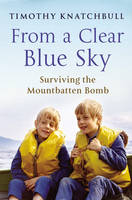
On the August bank holiday weekend in 1979, 14-year-old Timothy Knatchbull went out on a boat trip off the shore of Mullaghmore in County Sligo, Ireland. It was a trip that would cost four lives – and change his own forever.
-

€16.95
The northwest of Ireland provides a diversity of walks, from the wild, untamed landscape of Donegal to the gentler hills and green valleys of Sligo and Leitrim. This guidebook describes 27 walks of various grades, accompanied by quality photographs and specially drawn maps. Walk descriptions also include material on the rich natural history, folklore, geology and place names of the area. Since most routes are not signposted or waymarked, an up-to-date guidebook is essential. This will inspire you to get your walking boots on and start exploring this majestic landscape.
-
€3.50
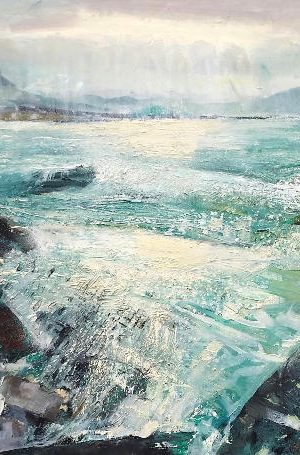
Belfast-born artist Neal Greig studied fine art to postgraduate level at Edinburgh College of Art. He has had one-man shows around Ireland and America. His work is in public and private collections and has drawn support from grant-awarding bodies including the Arts Council and the Pollock-Krasner Foundation.
Neal has two studios: one in a barn next to his farmhouse on the edge of the Castle Leslie estate in Glaslough, County Monaghan, and the Bath House Studio on Coney Island in County Sligo. He paints in the open air and offers painting workshops at both studios.
www.nealgreig.com
-

€19.95
Description
In January 1939, just months after hanging up his boots and a few weeks into his new career as a talent scout, William Ralph ‘Dixie’ Dean, the former Everton and England legend, received a surprise request for assistance from the far west of Ireland. Could he find a goalscorer for Sligo Rovers – the beating heart of a small, provincial town – to drive their dreams of a lucrative cup run and help protect the club’s very existence? Dean set about finding the right man, but unable to locate candidates willing to make the move across the Irish Sea, he had an idea. What if he were to answer Sligo’s call? And so began the unlikely story of how one of the greatest centre-forwards ever to grace the game added an unexpected and ultimately uplifting chapter to his storied football career.
In the Shadow of Benbulben is a romantic tale of divine intervention, uncanny timing and drama on and off the pitch. It’s the tale of ‘Dixie’ Dean’s four months with the Bit O’Red that was to leave an indelible mark on the player, the club and the town.
-
€50.00
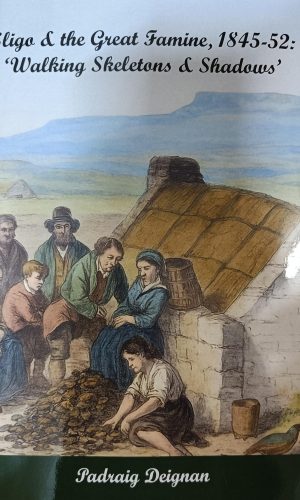
Sligo offers a unique setting for a study of the Great Famine and the book investigates the period from the first appearance of the blight to the immediate aftermath. The shifting, inept and often heartless government policies reflected different attitudes to famine relief and this impacted on the people in a very direct and often catastrophic way.
Sligo experienced considerable death and emigration in the years from 1845 to 1852; the second worst affected county in the country after Mayo, losing a third of its population in just a few short years. The reaction of local landlords and landholders to the suffering was also varied and the study explored the lengths to which the Famine offered an opportunity to some landlords to impose long-term policies on their estates.
Padraig Deignan has previously published ‘The Protestant Community in Sligo, 1914-49’ in 2010, ‘Land and People in Nineteenth Century Sligo: from Union to Local Government’ in 2015 and ‘Sligo in the Eighteenth Century’ in 2021.
-
-
€29.95
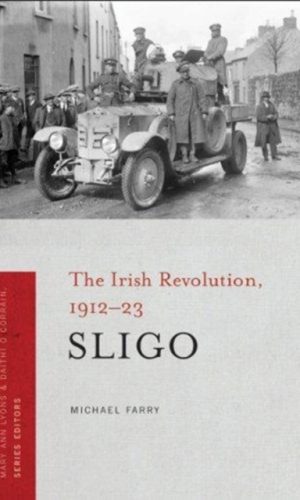
Using a wide array of sources and interviews, Michael Farry has produced a balanced, comprehensive and absorbing study of county Sligo from 1912 when the Irish Party controlled all political affairs to 1922–3 when the county saw considerable action during the civil war. This wide-ranging study offers fascinating new insights into the Irish Revolution and details how the county moved from being one of the most loyal to the Irish Party to one of the best-organised Sinn Féin counties. Farry is especially good on how both organised unionism and the strong labour movement in Sligo reacted to the rise of Sinn Féin, its election victory in 1918 and the subsequent Truce, Treaty and civil war. His use of the recently released BMH accounts as well as British military sources results in a richly detailed examination of the IRA campaign and the British reaction. It examines the superior attitude of the IRA towards ‘mere politicians’ during the Truce period and explains why Sligo saw so much conflict during the civil war.
-
€20.00
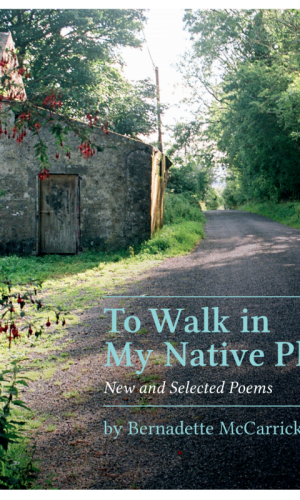
To Walk in My Native Place
By Bernadette McCarrick
A book of poems with an accompanying set of photographs on the theme of Native Place.
A coffee table book merging poetry and photography.
“The poems in this collection are a lovingly observed portrait of the poet’s home place. Each poem captures a moment, a place or an event in a language that is evocative yet never sentimental.”
Gerry Boland – September, 2020