War / History

  • Night of Power

    Night of Power

    24.95

    In this final work from renowned journalist Robert Fisk, he picks up reporting on the Middle East where his internationally bestselling The Great War of Civilisation left off.

    Fully immersed in the Middle East and critical of the West’s ongoing interference, Fisk was committed to uncovering complex and uncomfortable truths that rarely featured on the traditional news agenda.With a foreword from fellow Middle East correspondent and former colleague Patrick Cockburn, Night of Power delivers an essential and final account from one of the world’s finest journalists, and proves itself timely as ever. An extraordinary chronicle of Fisk’s trademark rigorous journalism, historical analysis and eyewitness reporting.

  • A Nation is Born

    A Nation is Born

    23.95

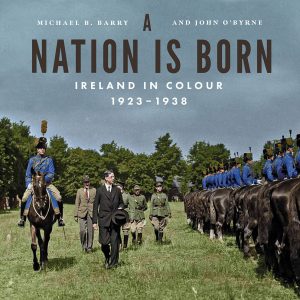
    A Nation Is Born celebrates a formative period in the history of the Irish state: the fifteen years during which we emerged from the rubble of wars and violence and set up as a fledgling country while establishing a diplomatic presence on the world stage.

    The photos presented here have been painstakingly hand-colourised by photographer John O’Byrne, infusing energy into this often-overlooked time: the election of the country’s first governments; the mammoth Shannon hydroelectric scheme; a stunning Eucharistic Congress; scenes of cottage industry and rural Irish life; and ending with the uncertain rumblings of war in Europe.

    With over 150 photographs gathered from archives around the country, accompanied by insightful and accessible commentary by historian Michael B. Barry, A Nation Is Born brings a fresh perspective on our history and our past to life in a compellingly real way.

  • A History Of Water

    A History Of Water

    13.50

    From award-winning writer Edward Wilson-Lee, this is a thrilling true historical detective story set in sixteenth-century Portugal. A History of Water follows the interconnected lives of two men across the Renaissance globe. One of them – an aficionado of mermen and Ethiopian culture, an art collector, historian and expert on water-music – returns home from witnessing the birth of the modern age to die in a mysterious incident, apparently the victim of a grisly and curious murder.

    The other – a ruffian, vagabond and braggart, chased across the globe from Mozambique to Japan – ends up as the national poet of Portugal. The stories of Damiao de Gois and Luis de Camoes capture the extraordinary wonders that awaited Europeans on their arrival in India and China, the challenges these marvels presented to longstanding beliefs, and the vast conspiracy to silence the questions these posed about the nature of history and of human life. Like all good mysteries, everyone has their own version of events.

  • The World

    The World

    19.95

    From the master storyteller and internationally bestselling author – the story of humanity from prehistory to the present day, told through the one thing all humans have in common: family. We begin with the footsteps of a family walking along a beach 950,000 years ago. From here, Montefiore takes us on an exhilarating epic journey through the families that have shaped our world: the Caesars, Medicis and Incas, Ottomans and Mughals, Bonapartes, Habsburgs and Zulus, Rothschilds, Rockefellers and Krupps, Churchills, Kennedys, Castros, Nehrus, Pahlavis and Kenyattas, Saudis, Kims and Assads.

    A rich cast of complex characters form the beating heart of the story. Some are well-known leaders, from Alexander the Great, Attila, Ivan the Terrible and Genghis Khan to Hitler, Thatcher, Obama, Putin and Zelensky. Some are creative, from Socrates, Michelangelo and Shakespeare to Newton, Mozart, Balzac, Freud, Bowie and Tim Berners-Lee.

    Others are lesser-known: Hongwu, who began life as a beggar and founded the Ming dynasty; Kamehameha, conqueror of Hawaii; Zenobia, Arab empress who defied Rome; King Henry of Haiti; Lady Murasaki, first female novelist; Sayyida al-Hurra, Moroccan pirate-queen. Here are not just conquerors and queens but prophets, charlatans, actors, gangsters, artists, scientists, doctors, tycoons, lovers, wives, husbands and children. This is world history on the most grand and intimate scale – spanning centuries, continents and cultures, and linking grand themes of war, migration, plague, religion, medicine and technology to the people at the centre of the human drama.

    As spellbinding as fiction, The World captures the story of humankind in all its joy, sorrow, romance, ingenuity and cruelty in a ground-breaking, single narrative that will forever shift the boundaries of what history can achieve.

  • The Greek Revolution

    The Greek Revolution

    19.95

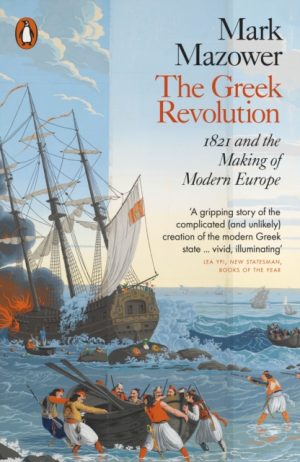
    Mark Mazower’s wonderful new book recreates one of the most compelling, unlikely and significant events in the story of modern Europe. In the face of near impossible odds, the people of the villages, valleys and islands of Greece rose up against Sultan Mahmud II and took on the might of the imperial Ottoman armed forces, its Turkish cavalrymen, Albanian foot soldiers and the fearsome Egyptians.

    Despite the most terrible disasters, they held on until military intervention by Russia, France and Britain finally secured the kingdom of Greece. Mazower brilliantly brings together the different strands of the story. He takes us into the minds of revolutionary conspirators and the terrors of besieged towns, the stories of itinerant priests, sailors and slaves, ambiguous heroes and defenceless women and children struggling to stay alive amid a conflict of extraordinary brutality.

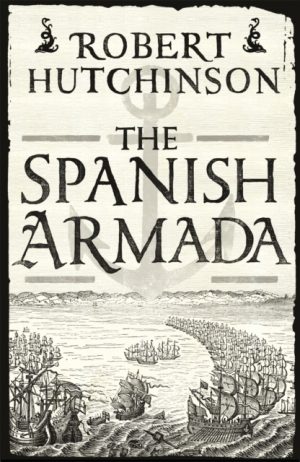
  • The Spanish Armada

    The Spanish Armada

    12.50

    A dramatic blow-by-blow account of the defeat of the Spanish Armada by the English fleet – a tale of daring and disaster on the high seas by one of our best narrative historians. After the accession of Elizabeth I in 1558, Protestant England was beset by the hostile Catholic powers of Europe – not least Spain. In October 1585 King Philip II of Spain declared his intention to destroy Protestant England and began preparing invasion plans, leading to an intense intelligence war between the two countries, culminating in the dramatic sea battles of 1588.

    Robert Hutchinson’s tautly written book is the first to examine this battle for intelligence, and uses everything from contemporary eye-witness accounts to papers held by the national archives in Spain and the UK to recount the dramatic battle that raged up the English Channel. Contrary to popular theory, the Armada was not defeated by superior English forces – in fact, Elizabeth I’s parsimony meant that her ships had no munitions left by the time the Armada had fought its way up to the south coast of England. In reality it was a combination of inclement weather and bad luck that landed the killer blow on the Spanish forces, and of the 125 Spanish ships that set sail against England, only 60 limped home – the rest sunk or wrecked with barely a shot fired.

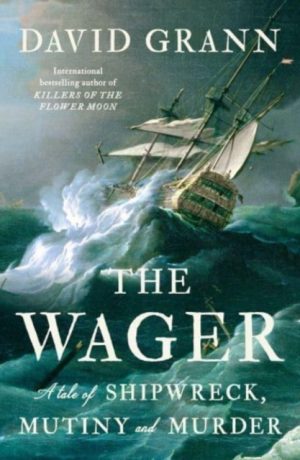
  • The Wager

    The Wager

    17.50

    1 BESTSELLER From the international bestselling author of KILLERS OF THE FLOWER MOON and THE LOST CITY OF Z, a mesmerising story of shipwreck, mutiny and murder, culminating in a court martial that reveals a shocking truth. On 28th January 1742, a ramshackle vessel of patched-together wood and cloth washed up on the coast of Brazil. Inside were thirty emaciated men, barely alive, and they had an extraordinary tale to tell.

    They were survivors of His Majesty’s ship the Wager, a British vessel that had left England in 1740 on a secret mission during an imperial war with Spain. While chasing a Spanish treasure-filled galleon, the Wager was wrecked on a desolate island off the coast of Patagonia. The crew, marooned for months and facing starvation, built the flimsy craft and sailed for more than a hundred days, traversing 2,500 miles of storm-wracked seas.

    They were greeted as heroes. Then, six months later, another, even more decrepit, craft landed on the coast of Chile. This boat contained just three castaways and they had a very different story to tell.

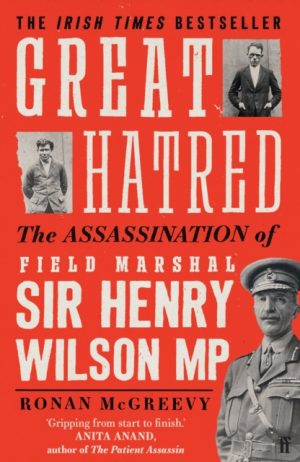
  • Great Hatred

    Great Hatred

    13.50

    A gripping investigation into one of Irish history’s greatest mysteries, Great Hatred reveals the true story behind one of the most significant political assassinations to ever have been committed on British soil.

    ‘Heart-stopping . . . The book is both forensic and a page-turner, and ultimately deeply tragic, for Ireland as much as for the murder victim.‘ MICHAEL PORTILLO

    On 22 June 1922, Sir Henry Wilson – the former head of the British army and one of those credited with winning the First World War – was shot and killed by two veterans of that war turned IRA members in what was the most significant political murder to have taken place on British soil for more than a century.

    His assassins were well-educated and pious men. One had lost a leg during the Battle of Passchendaele. Shocking British society to the core, the shooting caused consternation in the government and almost restarted the conflict between Britain and Ireland that had ended with the Anglo-Irish Treaty just five months earlier.

    Wilson’s assassination triggered the Irish Civil War, which cast the darkest of shadows over the new Irish State. Who ordered the killing? Why did two English-born Irish nationalists kill an Irish-born British imperialist? What was Wilson’s role in the Northern Ireland government and the violence which matched the intensity of the Troubles fifty years later? Why would Michael Collins, who risked his life to sign a peace treaty with Great Britain, want one of its most famous soldiers dead, and how did the Wilson assassination lead to Collins’ tragic death in an ambush two months later?

    Drawing upon newly released archival material and never-before-seen documentation, Great Hatred is a revelatory work that sheds light on a moment that changed the course of Irish and British history for ever.

    McGreevy provides more than the anatomy of a political murder; in reconstructing this era of blood, poverty and wartime trauma, he also gives full expression to the terrible forces that WB Yeats once called the “fanatic heart” and the “great hatred”.‘ THE TIMES

    Thoughtful and well-researched . . . an important and valuable addition to the library of the Irish Revolution.‘PROFESSOR DIARMAID FERRITER, University College Dublin

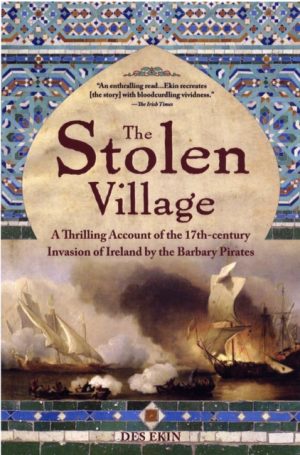
  • The Stolen Village

    The Stolen Village

    14.95

    In June 1631 pirates from Algiers and armed troops of the Turkish Ottoman Empire, led by the notorious pirate captain Morat Rais, stormed ashore at the little harbour village of Baltimore in West Cork. They captured almost all the villagers and bore them away to a life of slavery in North Africa. The prisoners were destined for a variety of fates — some would live out their days chained to the oars as galley slaves, while others would spend long years in the scented seclusion of the harem or within the walls of the Sultan’s palace.

    The old city of Algiers, with its narrow streets, intense heat and lively trade, was a melting pot where the villagers would join slaves and freemen of many nationalities. Only two of them ever saw Ireland again. The Sack of Baltimore was the most devastating invasion ever mounted by Islamist forces on Ireland or England.

    Des Ekin’s exhaustive research illuminates the political intrigues that ensured the captives were left to their fate, and provides a vivid insight into the kind of life that would have awaited the slaves amid the souks and seraglios of old Algiers. The Stolen Village is a fascinating tale of international piracy and culture clash nearly 400 years ago and is the first book to cover this relatively unknown and under-researched incident in Irish history. Shortlisted for the Argosy Irish Nonfiction Book of the Year Award.

  • Madhouse at the End of the Earth

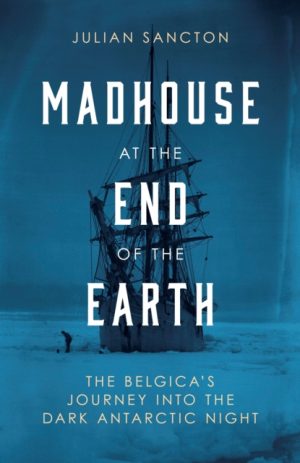
    Madhouse at the End of the Earth

    17.95

    The harrowing, survival story of an early polar expedition that went terribly wrong, with the ship frozen in ice and the crew trapped inside for the entire sunless, Antarctic winter

    August 1897: The Belgica set sail, eager to become the first scientific expedition to reach the white wilderness of the South Pole. But the ship soon became stuck fast in the ice of the Bellinghausen sea, condemning the ship’s crew to overwintering in Antarctica and months of endless polar night. In the darkness, plagued by a mysterious illness, their minds ravaged by the sound of dozens of rats teeming in the hold, they descended into madness.

  • The Bomber Mafia

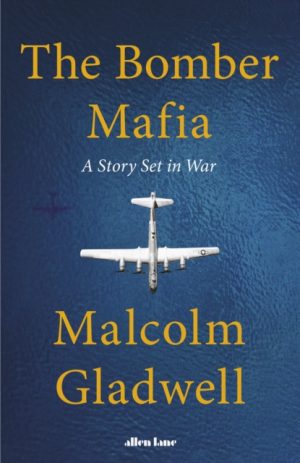
    The Bomber Mafia

    23.95

    The international bestselling author returns with an exploration of one of the grandest obsessions of the twentieth century. ‘The Bomber Mafia is a case study in how dreams go awry. When some shiny new idea drops from the heavens, it does not land softly in our laps. It lands hard, on the ground, and shatters.’

    In the years before the Second World War, in a sleepy air force base in central Alabama, a small group of renegade pilots put forth a radical idea.

    What if we made bombing so accurate that wars could be fought entirely from the air? What if we could make the brutal clashes between armies on the ground a thing of the past?

    This book tells the story of what happened when that dream was put to the test. The Bomber Mafia follows the stories of a reclusive Dutch genius and his homemade computer, Winston Churchill’s forbidding best friend, a team of pyromaniacal chemists at Harvard, a brilliant pilot who sang vaudeville tunes to his crew, and the bomber commander, Curtis Emerson LeMay, who would order the bloodiest attack of the Second World War. In this tale of innovation and obsession, Gladwell asks: what happens when technology and best intentions collide in the heat of war? And what is the price of progress?

  • Ireland's Pirate Trail

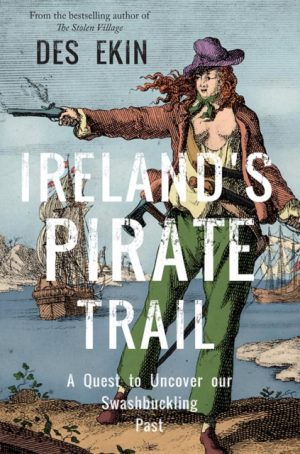
    Ireland’s Pirate Trail

    14.95

    Bloodthirsty buccaneers and buried treasure, fierce sea battles and cold-blooded murders, Barbary ducats and silver pieces of eight. Des Ekin embarks on a road trip around the entire coast of Ireland, in search of our piratical heritage, uncovering an amazing history of swashbuckling bandits, both Irish-born and imported. Ireland’s Pirate Trail tells stories of freebooters and pirates from every corner of our coast over a thousand years, including famous pirates like Anne Bonny and William Lamport, who set off to ply their trade in the Caribbean.

    Ekin also debunks many myths about our most well-known sea warrior, Granuaile, the ‘Pirate Queen’ of Mayo. Thoroughly researched and beautifully told. Filled with exciting untold stories.

  • The Ratline

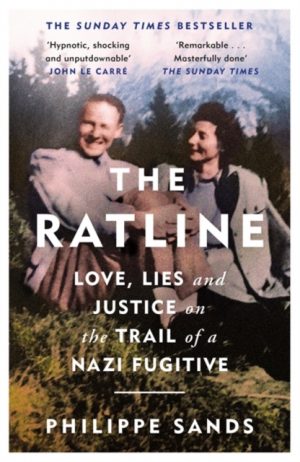
    The Ratline

    13.50

    Description
    THE SUNDAY TIMES BESTSELLER’Hypnotic, shocking and unputdownable’ JOHN LE CARRE’Remarkable’ THE SUNDAY TIMES’Breathtaking, gripping, shattering’ ELIF SHAFAK’A taut and finely crafted factual thriller’ OBSERVER’A triumph of research and brilliant storytelling’ ANTONY BEEVOR’Extraordinary’ EVENING STANDARDIn this riveting real-life thriller, Philippe Sands offers a unique account of the daily life of senior Nazi SS Brigadefuhrer Otto Freiherr von Wachter and his wife, Charlotte. Drawing on a remarkable archive of family letters and diaries, he unveils a fascinating insight into life before and during the war, as a fugitive on the run in the Alps and then in Rome, and into the Cold War. Eventually the door is unlocked to a mystery that haunts Wachter’s youngest son, who continues to believe his father was a good man – what happened to Otto Wachter while he was preparing to travel to Argentina on the ‘ratline’, assisted by a Vatican bishop, and what was the explanation for his sudden and unexpected death?

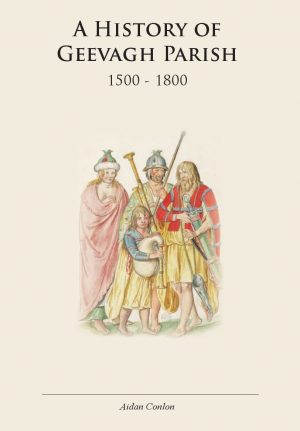
  • A History Of Geevagh 1500-1800

    A History Of Geevagh 1500-1800

    25.00

    This Book escribes aspects of the way people in the Geevagh area lived during a period of great economic, social and political change in Ireland.

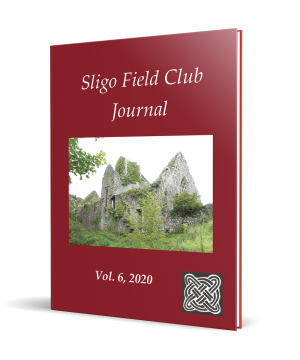
  • Sligo Field Club Journal Vol 6

    Sligo Field Club Journal Vol 6

    20.00

    Martin Wilson Presidential

    Martin A. Timoney Editorial

    Don C.F. Cotton
    Peat and wood deposits along the seashore of Co. Sligo

    Martin A. Timoney
    Early Bronze Age Cist Grave, Moylough, 1928

    Martin A. Timoney
    Imitative Fert Burials, Knocknashammer

    Brian Lacey
    Cúl Dreimne, Drumcliff and Colum Cille

    Jim Higgins
    Some County Sligo Rood Lofts

    Jim Higgins
    Medieval Men in Feathered Suits at Sligo Abbey

    Conor MacHale
    Ó Dubhda Family of Sligo

    Eamonn P. Kelly
    Antiquarian Research in Co. Sligo

    Eamonn P. Kelly
    Battle of Moytura and the Enchanted Forge

    John McKeon
    Lord Palmerston’s Sligo Town Properties

    Peter Henry
    Some Sligo-related Armorial Bookplates

    John Mullaney
    V.E. Day 2020

    Conchubhar Ó Crualaoich
    Monasterredan: How Looks Can Deceive

    Harry Keaney
    Field-names ‘Sketch the Land in Language’

    Ben Healy
    God-out-of-the-Bottle

    Rory Callagy
    Remembering Des Smith

  • Hitler and Stalin

    Hitler and Stalin

    18.50

    This compelling book on Hitler and Stalin – the culmination of thirty years’ work – examines the two tyrants during the Second World War, when Germany and the Soviet Union fought the biggest and bloodiest war in history. Yet despite the fact they were bitter opponents, Laurence Rees shows that Hitler and Stalin were, to a large extent, different sides of the same coin.

    Hitler’s charismatic leadership may contrast with Stalin’s regimented rule by fear; and his intransigence later in the war may contrast with Stalin’s change in behaviour in response to events. But at a macro level, both were prepared to create undreamt of suffering, destroy individual liberty and twist facts in order to build the Utopia they wanted, and while Hitler’s creation of the Holocaust remains a singular crime, Rees shows why we must not forget that Stalin committed a series of atrocities at the same time.

    Using previously unpublished, startling eyewitness testimony from soldiers of the Red Army and Wehrmacht, civilians who suffered during the conflict, and those who knew both men personally, bestselling historian Laurence Rees – probably the only person alive who has met Germans who worked for Hitler and Russians who worked for Stalin – challenges long-held popular misconceptions about two of the most important figures in history. This is a masterwork from one of our finest historians.