Leaning On Gates
€18.00O’ROURKE, SEAMUS

Showing 161–176 of 1005 resultsSorted by latest


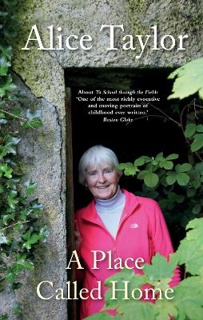



Yet, as he set off on his pilgrimage, he found he wasn’t alone. Accompanying him on his 126-kilometre walk in theheat of the Spanish sun was the ghost of his long-dead father, a distant and aloof figure whom he lost when he was only twenty-two years old. Here, with searing honesty and beautifully wrought prose, Harding examines how this man, who had diedalmost half a century ago, could have had such a profound effect on the writer’s life.


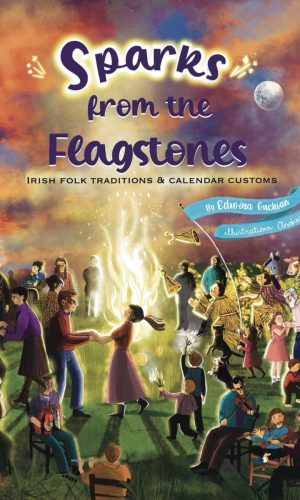
Dancer Edwina Guckian celebrates the folk traditions and calendar customs of the Ireland in which she grew up in rural County Leitrim.
As a child Edwina’s Grandfather brought her to House Dances where he played the fiddle and she watched dancers in hobnail boots ‘knock sparks from the flagstones’ on traditional cottage stone floors. Half-doors were taken down from their hinges to dance on when the floors were rough or uneven.
Edwina too became ‘a great one for knocking sparks’ from the flagstones with her own dancing. Here she brings to life for readers of all ages the lovely colourful customs, fun and enchantments of her childhood. Dressing up for Halloween, Wren Day and Brigid’s Day, going to communal bonfires at the crossroads, remembering the harvest ‘meitheal’ and hilltop berry picking on Bilberry Sunday.
Edwina vividly brings to life a world of Strawboys, Mummers and Biddy Boys, Crossroads Dances, Cake Dances, Nollaig na mBan feasts, Easter treats and many more year round Irish folk traditions.
Join Edwina as she dances through the Celtic Calendar Year and the importance of ancient Quarter Day customs and old-world Fire Festival traditions at Samhain, Imbolc, Bealtaine and Lughnasa. Every page of Sparks from the Flagstones is joyfully illustrated by Connemara-based artist Andrea Rossi.

‘The premier satirist of great British crapness is on killer form in this gag-a-minute mystery’ Observer
‘A new Jonathan Coe is always a treat… Coe is a master at exploring the pains of modern life’ The Times
—
Post-university life doesn’t suit Phyl. Time passes slowly living back home with her parents, working a zero-hour contract serving Japanese food to holidaymakers at Heathrow’s Terminal 5.
As for her budding plans of becoming a writer, those are going nowhere.
That is, until family friend Chris comes to stay. He’s been on the path to uncover a sinister think-tank, founded at Cambridge University in the 1980s, that’s been scheming to push the British government in a more extreme direction. One that’s finally poised to put their plans into action.
But speaking truth to power can be dangerous – and power will stop at nothing to stay on top.
As Britain finds itself under the leadership of a new Prime Minister whose tenure will only last for seven weeks, Chris pursues his story to a conference being held deep in the Cotswolds, where events take a sinister turn and a murder enquiry is soon in progress.
But will the solution to the mystery lie in contemporary politics, or in a literary enigma that is almost forty years old?

THE TOP FIVE SUNDAY TIMES BESTSELLER
This is the story of one lost poem, two great rivers, and three remarkable lives – all connected by a single drop of water.
*****
In the ruins of Nineveh, that ancient city of Mesopotamia, there lies hidden in the sand fragments of a long-forgotten poem, the Epic of Gilgamesh.
In Victorian London, an extraordinary child is born at the edge of the dirt-black Thames. When his brilliant memory earns him a spot as an apprentice at a printing press, the world opens up far beyond the slums and across the seas.
In 2014 Turkey, Narin, a Yazidi girl living by the River Tigris, waits to be baptised. The ceremony is cruelly interrupted, and soon she and her grandmother must journey across war-torn lands in the hope of reaching the sacred valley of their people.
In 2018 London, broken-hearted Zaleekhah, a hydrologist, moves to a houseboat on the Thames to escape the wreckage of her marriage – until an unexpected connection to her homeland changes everything.
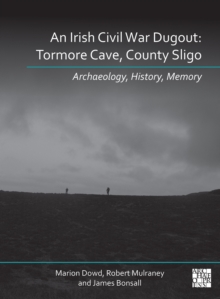
A brutal Civil War erupted across Ireland in June 1922. The IRA, in opposition to the development of a pro-Treaty government, returned to the familiar guerrilla tactics of the War of Independence. Hundreds of dugouts constructed in rural settings were key to the IRA campaign.
These secret places offered safe shelter to men on the run, while also allowing for supplies and arms to be stored and prisoners held. Tormore Cave, high in the mountains of County Sligo, in the northwest of Ireland, was one such dugout. Over 30 Republican men sought refuge there for six weeks in September and October 1922.
Like most dugouts, Tormore Cave was never mentioned in historical accounts or documentary sources, but its significance was remembered locally. Archaeological excavations conducted on the centenary of its occupation revealed the extensive modifications that had transformed this natural limestone cave into a habitable military dugout, a crucial refuge for combatants whose comrades had been executed or arrested by Government forces. The historical artefacts and environmental material recovered during the excavations, combined with detailed archaeological surveys and analyses, provide a fascinating insight into the conditions endured by those billeted there.
The lives of the men and women directly associated with the cave dugout are explored, including an in-depth study of IRA General Officer Commanding Billy Pilkington – a key figure during the Irish revolutionary period who has, until now, been largely overlooked. An Irish Civil War Dugout: Tormore Cave, County Sligo adopts a multidisciplinary approach, the first of its kind in an Irish context, combining archaeology, local and military histories, family memories, community recollections, and landscape studies. This groundbreaking study – the first archaeological excavation of a Civil War site in Ireland, facilitates a wider discussion of the role of dugouts in guerrilla warfare.
By focussing in detail on one site at a local level, this book provides a unique and valuable contribution to the Irish revolutionary period on a regional and national scale.
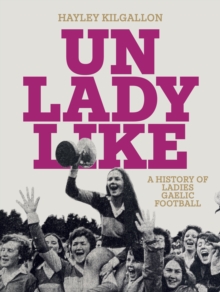
After first emerging in the 1920s, ladies Gaelic football was soon sidelined; breathless women chasing after a football was just too unladylike for the powers that be. Despite this resistance, the sport became a popular novelty act at local carnivals. And when the Ladies GaelicFootball Association (LGFA) was founded in Tipperary in July 1974, fifty years of extraordinary growth were set in motion.
From writing the rule book to a membership of nearly 200,000, the earliest All-Stars to game-changing partnerships, this definitive history captures that unstoppable journey to becoming a national sport and so much more. Lavishly illustrated and drawing from national, club and personal archives, UNLADYLIKE is for the players, the fans, the kit-washers, the sandwich-makers and the supporters alike, and confirms the best is yet to come.
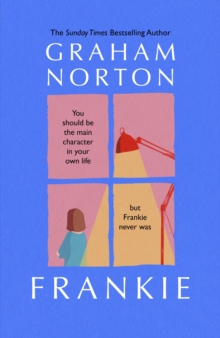
The brand-new novel from million-copy bestseller and national treasure Graham Norton – a dazzling, decades-sweeping story about love, bravery and what it means to live a significant life.
Always on the periphery, looking on, young Frankie Howe was never quite sure enough of herself to take centre stage – after all, life had already judged her harshly. Now old, Frankie finds it easier to forget the life that came before. Then Damian, a young Irish carer, arrives at her London flat, there to keep an eye on her as she recovers from a fall.
A memory is sparked, and the past crackles into life as Damian listens to the story Frankie has kept stored away all these years. Travelling from post-war Ireland to 1960s New York – a city full of art, larger than life characters and turmoil – Frankie shares a world in which friendship and chance encounters collide. A place where, for a while, life blazes with an intensity that can’t last but will perhaps live on in other ways and in other people.
But as Frankie’s past slowly emerges, her spirit and endurance are revealed as undeniable . . .