Sligo

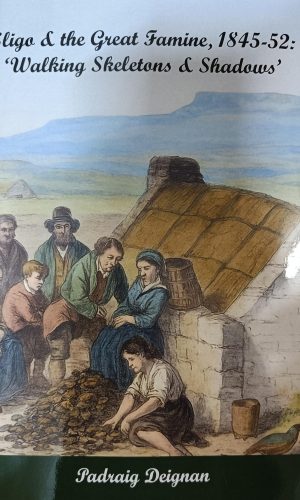
  • Sligo and the Great Famine, 1845-52 Walking Skeletons and Shadows

    Sligo and the Great Famine, 1845-52 Walking Skeletons and Shadows

    50.00

    Sligo offers a unique setting for a study of the Great Famine and the book investigates the period from the first appearance of the blight to the immediate aftermath. The shifting, inept and often heartless government policies reflected different attitudes to famine relief and this impacted on the people in a very direct and often catastrophic way.

    Sligo experienced considerable death and emigration in the years from 1845 to 1852; the second worst affected county in the country after Mayo, losing a third of its population in just a few short years. The reaction of local landlords and landholders to the suffering was also varied and the study explored the lengths to which the Famine offered an opportunity to some landlords to impose long-term policies on their estates.

    Padraig Deignan has previously published ‘The Protestant Community in Sligo, 1914-49’ in 2010, ‘Land and People in Nineteenth Century Sligo: from Union to Local Government’ in 2015 and ‘Sligo in the Eighteenth Century’ in 2021.

  • Kitty- Finding Love In War

    Kitty- Finding Love In War

    17.00

    Growing up in 1930’s rural Ireland, Kitty had a hard start to life. Never knowing her father meant that she always had a longing to know what he was like. aFter moving to London to start a new life for herself, Kitty had not planned on World War 2 starting and making life very difficult. Little did she know that meeting an English soldier at an Irish dance would change her life forever.

  • LeafLight Moon

    LeafLight Moon

    20.00

    PRE -ORDER

    This book will be shipped once available on release (Approx 25th August)


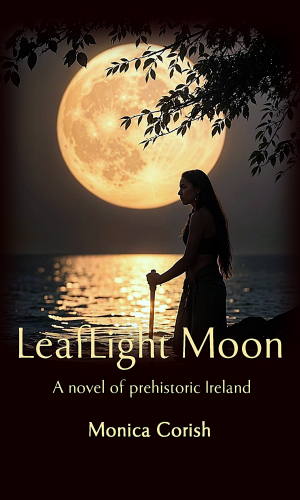
    LeafLight Moon – a novel of prehistoric Ireland

    Sligo, 4000 BC: Closely researched and set in the rich prehistoric landscapes of Sligo and the north-west, LeafLight Moon tells the story of the fateful encounter between Ireland’s first farmers and the hunter-gatherers of the Hearth of MotherMountain – the mountain we call Knocknarea.

    For thousands of years, the hunter-gatherers of MotherMountain lived close to the earth, moving through the landscape with the seasons, following her rhythms and keeping her ways. They heard stories of a people who chopped down the greenwood and trapped animals behind fences, but these were only rumours, shiver-tales to share around the fire on long summer nights – until the day when two strangers arrived in a small boat, their skin as pale as downy-birch,

    their eyes as dark as the eyes of seals…

  • Water In The Desert, Fire In The Night

    Water In The Desert, Fire In The Night

    16.00
    Description
    Because the thing about the end of the world is that it happens all the time. Someone leaves and it’s the end of the world. Someone comes back and it’s the end of the world.

    Somebody puts their cock in you and it’s the end of the world. Somebody stops putting their cock in you and it’s the end of the world. Here is a novel about mothering, wolves, bicycles, midwifery, post-apocalyptic feminism, gold, hunger and hope.

    It’s about an underachieving millennial, a retired midwife and an Irishman who set out from London after the end of the world to cycle to a sanctuary in the southern Alps. It’s about the porousness of the female bodily experience, the challenges of being an empiricist with a sample size of one, what’s worth knowing, what’s worth living, and the necessity of irrationality. It’s about the fact that the world ends all the time, and it’s about what to try to do next.

  • Sligo Field Club Journal Vol 10

    Sligo Field Club Journal Vol 10

    25.00

    An Ongoing Mission: this Journal will continue the ambition of Sligo Field Club, formerly Sligo Antiquarian Society, and now in its eightieth year, to protect Sligo’s rich archaeological and historical heritage. The Journal provides a platform for authors to record and analyse the rich heritage of Sligo and the greater North Connacht region across a wide range of topics.


  • Sligo- The Irish Revolution,1912-23

    Sligo- The Irish Revolution,1912-23

    29.95

    Using a wide array of sources and interviews, Michael Farry has produced a balanced, comprehensive and absorbing study of county Sligo from 1912 when the Irish Party controlled all political affairs to 1922–3 when the county saw considerable action during the civil war. This wide-ranging study offers fascinating new insights into the Irish Revolution and details how the county moved from being one of the most loyal to the Irish Party to one of the best-organised Sinn Féin counties. Farry is especially good on how both organised unionism and the strong labour movement in Sligo reacted to the rise of Sinn Féin, its election victory in 1918 and the subsequent Truce, Treaty and civil war. His use of the recently released BMH accounts as well as British military sources results in a richly detailed examination of the IRA campaign and the British reaction. It examines the superior attitude of the IRA towards ‘mere politicians’ during the Truce period and explains why Sligo saw so much conflict during the civil war.

  • Bringing Them Home

    Bringing Them Home

    24.00

    HICKEY, SIMONE

  • An Irish Civil War Dugout Tormore Cave, County Sligo

    An Irish Civil War Dugout Tormore Cave, County Sligo

    48.00

    A brutal Civil War erupted across Ireland in June 1922. The IRA, in opposition to the development of a pro-Treaty government, returned to the familiar guerrilla tactics of the War of Independence. Hundreds of dugouts constructed in rural settings were key to the IRA campaign.

    These secret places offered safe shelter to men on the run, while also allowing for supplies and arms to be stored and prisoners held. Tormore Cave, high in the mountains of County Sligo, in the northwest of Ireland, was one such dugout. Over 30 Republican men sought refuge there for six weeks in September and October 1922.

    Like most dugouts, Tormore Cave was never mentioned in historical accounts or documentary sources, but its significance was remembered locally. Archaeological excavations conducted on the centenary of its occupation revealed the extensive modifications that had transformed this natural limestone cave into a habitable military dugout, a crucial refuge for combatants whose comrades had been executed or arrested by Government forces. The historical artefacts and environmental material recovered during the excavations, combined with detailed archaeological surveys and analyses, provide a fascinating insight into the conditions endured by those billeted there.

    The lives of the men and women directly associated with the cave dugout are explored, including an in-depth study of IRA General Officer Commanding Billy Pilkington – a key figure during the Irish revolutionary period who has, until now, been largely overlooked. An Irish Civil War Dugout: Tormore Cave, County Sligo adopts a multidisciplinary approach, the first of its kind in an Irish context, combining archaeology, local and military histories, family memories, community recollections, and landscape studies. This groundbreaking study – the first archaeological excavation of a Civil War site in Ireland, facilitates a wider discussion of the role of dugouts in guerrilla warfare.

    By focussing in detail on one site at a local level, this book provides a unique and valuable contribution to the Irish revolutionary period on a regional and national scale.

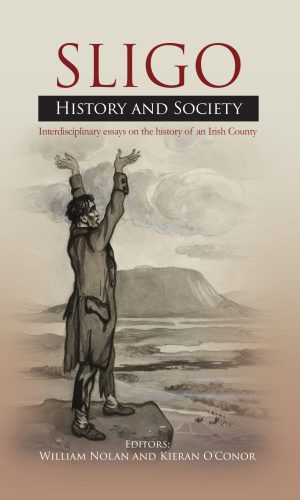
  • Sligo History and Society

    Sligo History and Society

    60.00

    Available Now

    Featuring essays from:

    Mary Gilmartin, Martin Timoney, Noel McCarthy, Carleton Jones, John Waddell, Rachel Moss and Tamyln McHugh, Kieran O’Connor, Yvonne McDermott, Nollaig Ó’Muraíle, Jack Johnston, Brendan Scott, Pádraig Lenihan, Conchubar Ó Crualaoich, David A. Fleming, David Dickson, Ciarán Mac Murchaidh, Tom Bartlett, Marie Boran and Brigid Clesham, Perry McIntyre and Richard Reid, Gerard Moran, Thomas Power, Jonathan Cherry, Fiona Gallagher, Aideen Ireland, Miriam Moffitt,  Mary Timoney, R.F. Foster, Charles Travis, Gregory Daly, Patrick E. O’Brien, Michael Farry, Anne O’Dowd, Proinnsias Breathnach, and Mary Cawley.

    Further information coming soon.

  • In My Own Words

    In My Own Words

    24.95

    Born in Sligo into a family of travelling entertainers, Sandy Kelly has become one of the top musical performers in Ireland. Sandy was co-opted into the family variety show from an early age. As a teenager she sang on the social club circuit in the UK, playing an ever more prominent role.

    When she returned to Ireland, she developed initially as a pop performer before following her instincts and concentrating on a music career. Her landmark 1989 recording of the Patsy Cline hit ‘Crazy’ led her to perform on stages all over the world, including the Grand Ole Opry in Nashville and the lead role in Patsy – The Musical in London’s West End. But the music industry can be a tough place.

    Sandy has dealt with prejudice and financial pressures. Alongside the glamour of show business, she has experienced the heartaches of divorce, family illness and death, and faced the challenges of raising a daughter with special needs. Sandy has stood strong at the heart of Ireland’s music scene for over four decades.

    Here, for the first time, she recounts the highs – and lows – of a lifetime in music, in her own words.

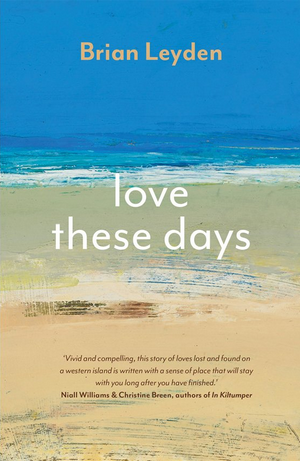
  • Love These Days

    Love These Days

    16.95


    Only love will save us … Tara Leonard returns after seven years abroad as a humanitarian aid worker to the island where she grew up on the northwest coast of Sligo. Having fled Creevy Island after a wounding marital breakup, she is back only to finalise her divorce. But as her stay on Creevy unexpectedly lengthens, events build to a dangerous reckoning where every ounce of her resourcefulness is tested.

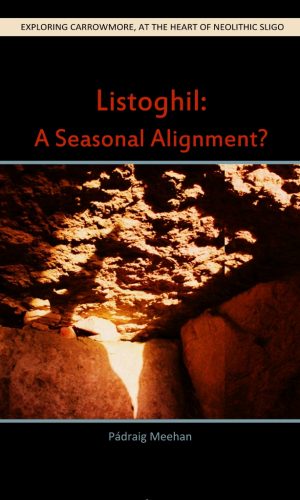
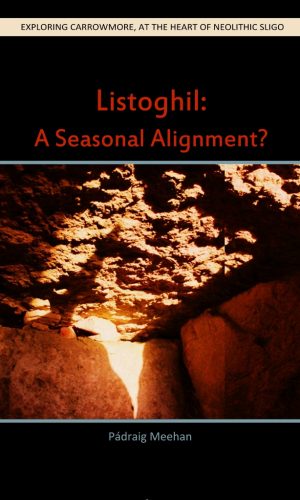
  • LISTOGHIL A SEASONAL ALIGNMENT? (Revised 2023)

    LISTOGHIL A SEASONAL ALIGNMENT? (Revised 2023)

    10.00

    Listoghil, the central monument and focal point of the Carrowmore passage tomb complex close to Sligo in north-west Ireland, has been ruined, excavated and eventually partially restored. However, the chamber is preserved in its original position. The author examines the hypothesis that Listoghil was deliberately aligned to mark seasonal transitions equivalent to astronomical cross-quarter days. The methods include a horizon survey, the isolation of directional features in the monument, and computer modelling of the monument and skyscape. Folklore and legends around seasonal transits, locally, in Ireland, and in many and varied (and independently arising) contexts at temperate latitudes of the world, are seen as information sources complementary to data gathering and observation.

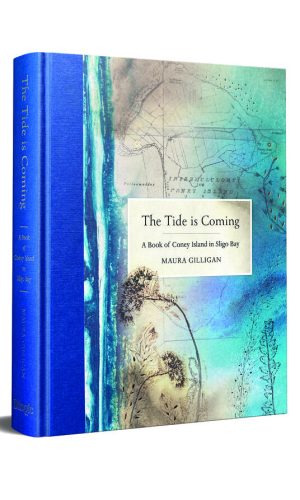
  • The Tide Is Coming

    The Tide Is Coming

    50.00

    The Tide is Coming – a book of Coney Island in Sligo Bay by Maura Gilligan –
    is a beautiful limited-edition publication containing prose, poetry, interviews, photographs
    and artwork.
    As the title of this book suggests, the rhythm of the tides has, for centuries, dictated the
    rhythm of life on Coney Island. During his lifetime, Islander John McGowan called out the
    warning “the tide is coming” countless times, ensuring that visitors would cross the causeway
    safely before channels at either side closed the strand passage and made an island of his
    shores.
    This little island is said to have given its name to Coney Island in New York! Its ancient
    name, Inismulclohy, can be found in maps, records and annals.

    Contents
    Insightful poetry and prose reflect the author’s thoughts as she moves across the Island in
    space and time.
    Author-transcribed interviews with Island elder John McGowan form an integral part of this
    book, illuminating eight decades of life in a place inhabited by John’s ancestors since 1789.
    There are echoes here of life on other offshore Irish islands, now uninhabited.
    Photographer James Fraher’s haunting black and white images, together with Catherine
    Fanning’s remarkable paintings, prints and line drawings, add visual depth and magic.

    Special Features
    The book itself is a work of art; a striking hardback cover collage is enhanced by timeless
    quarter binding, head and tail bands, marker ribbon and rich-coloured endpapers.  Sumptuous
    Munken paper provides the perfect backdrop for superb illustrations and exceptional writing.
    Folded within the pages of this book is a surprise – an A3 loose-leaf ‘Map of Coney Island in
    Sligo Bay’, which can be framed. Created from an old and fragile line-drawn original, the
    current version of this map illustrates locations on and around the Island, some of which still
    carry their original Irish names.
    The Tide is Coming is a wonderful history of an Irish island and a perfect gift.

  • Boatman for Mountbatten

    Boatman for Mountbatten

    24.95

    In ‘Boatman for Mountbatten’, O’Connor’s main focus is on the ordinary lives of the young boatmen and staff who worked in and around Classiebawn Castle. However, the impact of the shocking murder – and subsequent allegations that have emerged since then – cannot be ignored he said.

  • Mr. Attention To Detail

    Mr. Attention To Detail

    12.95

    KELLY, JOE

  • LISTOGHIL A SEASONAL ALIGNMENT

    LISTOGHIL A SEASONAL ALIGNMENT

    10.00

    Does the modern festival of Halloween, with its traditions of flying witches, games of chance and haunted by ghosts, have its roots in the Stone Age?

    Researcher Padraig Meehan explores the possibility that the turning points marking seasonal change were intentionally marked in the central monument at the Carrowmore passage tomb complex in County Sligo.