Local Interest

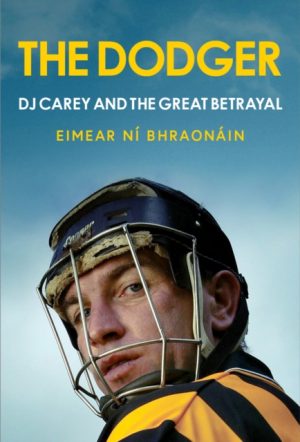
  • The Dodger

    The Dodger

    19.95

    There was a time when DJ Carey didn’t need a surname. The star player of a Kilkenny hurling team that dominated the sport for a decade, he had a rare, natural talent that led his county to five All Ireland titles and won him nine All Stars. DJ wasn’t just a hero on the pitch – his easy charm, generosity, and readiness to meet young fans made him a national treasure. Throughout his meteoric rise, strange rumours followed him. In 2003, shocking claims that DJ was dying of cancer swept the country. Who would spread such a story about one of Ireland’s most beloved sporting legends? And what could possibly be gained from it? Two decades later, the truth emerged. DJ Carey was arrested and charged with deception and forgery – accused of faking cancer to con money from those who trusted him most. For years, he had been telling the same lie to generous supporters who believed they were funding life-saving treatment in the U.S. In this riveting exposé, Eimear Ní Bhraonáin uncovers the extraordinary fall from grace of a national icon, and how he betrayed the fans that once loved him.
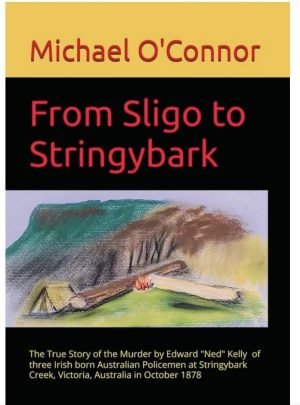
  • From Sligo to Stringybark

    From Sligo to Stringybark

    35.00

    The true story of the murder of three Irish-born Police Officers by the infamous Australian Bushranger, Edward ‘Ned’ Kelly, in Victoria, Australia, on the 26th October 1878.

  • Sligo and the Great Famine, 1845-52 Walking Skeletons and Shadows

    Sligo and the Great Famine, 1845-52 Walking Skeletons and Shadows

    50.00

    Sligo offers a unique setting for a study of the Great Famine and the book investigates the period from the first appearance of the blight to the immediate aftermath. The shifting, inept and often heartless government policies reflected different attitudes to famine relief and this impacted on the people in a very direct and often catastrophic way.

    Sligo experienced considerable death and emigration in the years from 1845 to 1852; the second worst affected county in the country after Mayo, losing a third of its population in just a few short years. The reaction of local landlords and landholders to the suffering was also varied and the study explored the lengths to which the Famine offered an opportunity to some landlords to impose long-term policies on their estates.

    Padraig Deignan has previously published ‘The Protestant Community in Sligo, 1914-49’ in 2010, ‘Land and People in Nineteenth Century Sligo: from Union to Local Government’ in 2015 and ‘Sligo in the Eighteenth Century’ in 2021.

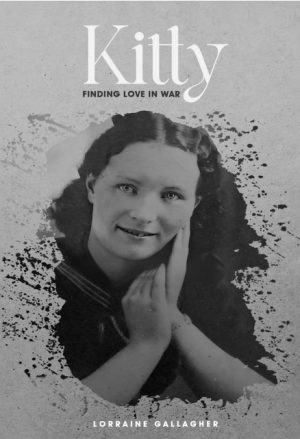
  • Kitty- Finding Love In War

    Kitty- Finding Love In War

    17.00

    Growing up in 1930’s rural Ireland, Kitty had a hard start to life. Never knowing her father meant that she always had a longing to know what he was like. aFter moving to London to start a new life for herself, Kitty had not planned on World War 2 starting and making life very difficult. Little did she know that meeting an English soldier at an Irish dance would change her life forever.

  • LeafLight Moon

    LeafLight Moon

    20.00

    PRE -ORDER

    This book will be shipped once available on release (Approx 25th August)


    LeafLight Moon – a novel of prehistoric Ireland

    Sligo, 4000 BC: Closely researched and set in the rich prehistoric landscapes of Sligo and the north-west, LeafLight Moon tells the story of the fateful encounter between Ireland’s first farmers and the hunter-gatherers of the Hearth of MotherMountain – the mountain we call Knocknarea.

    For thousands of years, the hunter-gatherers of MotherMountain lived close to the earth, moving through the landscape with the seasons, following her rhythms and keeping her ways. They heard stories of a people who chopped down the greenwood and trapped animals behind fences, but these were only rumours, shiver-tales to share around the fire on long summer nights – until the day when two strangers arrived in a small boat, their skin as pale as downy-birch,

    their eyes as dark as the eyes of seals…

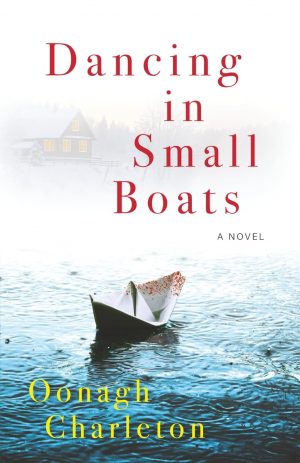
  • Dancing In Small Boats

    Dancing In Small Boats

    14.50

    Sara and Marcus hide in forests and abandoned houses, fighting to survive extreme weather events and the violent gangs that hunt for people and resources. Both are parents but only Sara has hope that her children are still alive.

    When she realises she needs Marcus’ help to find her family, their journey becomes fraught with complication. A brief encounter with a pregnant woman changes everything as she grapples with the complex nature of risk and the reliability of her own instincts.

    As she moves through the shadows, Sara discovers that fear can deliver freedom, love transcends loss and to kill means to live another day.

    “Wrenchingly brutal and infused with hope, this novel is a timely, visceral reminder to take nothing that is dear to us for granted.”

    ~ Kate Winter

    “Suspenseful and tense, Charleton narrates a story of loss and survival and the persistence of community. Urgent, tender and terrifyingly close to home, it is impossible to put down.”

    ~ Una Mannion

    “The suspense had me on edge from the start. Absolutely gripping, had me hooked”

    ~ Patience Dube

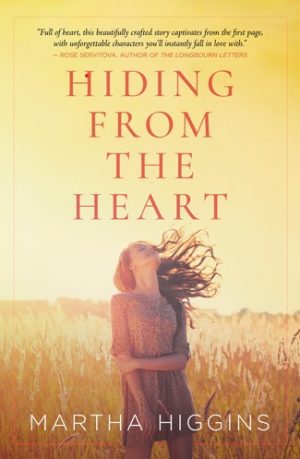
  • Hiding From The Heart

    Hiding From The Heart

    15.95

    She left to find freedom, only to discover everything she needed was waiting at home.

    At seventeen, Colette Keogh wants nothing more than to escape. Escape the family farm in the west of Ireland. Escape her mother’s criticism. Escape a future that feels like it’s already been written. But when her father suffers a stroke, her plans turn to dust. School is over. The city must wait. The farm – and her family – need her now.

    Then Robbie enters her life. Kind, steady and nothing like the boys she’s known before, Robbie makes Colette feels seen for the first time. But one tragic decision and a wave of grief upend everything. Robbie is gone, and Colette is left to navigate a life she no longer recognises.

    A move to Dublin promises the glamour Colette longs for, but the reality is far from what she imagined. And when a new friendship reignites her connection to the land, Colette begins to wonder if the life she ran from was the one she was meant to build all along.

    Hiding from the Heart is a tender, emotionally rich story of first love, family duty and the quiet power of coming home.


  • Water In The Desert, Fire In The Night

    Water In The Desert, Fire In The Night

    16.00
    Description
    Because the thing about the end of the world is that it happens all the time. Someone leaves and it’s the end of the world. Someone comes back and it’s the end of the world.

    Somebody puts their cock in you and it’s the end of the world. Somebody stops putting their cock in you and it’s the end of the world. Here is a novel about mothering, wolves, bicycles, midwifery, post-apocalyptic feminism, gold, hunger and hope.

    It’s about an underachieving millennial, a retired midwife and an Irishman who set out from London after the end of the world to cycle to a sanctuary in the southern Alps. It’s about the porousness of the female bodily experience, the challenges of being an empiricist with a sample size of one, what’s worth knowing, what’s worth living, and the necessity of irrationality. It’s about the fact that the world ends all the time, and it’s about what to try to do next.

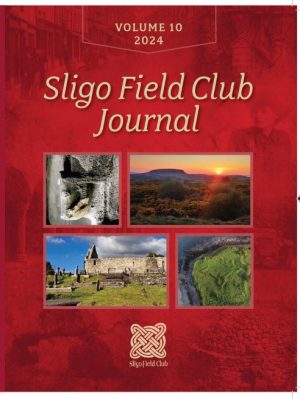
  • Sligo Field Club Journal Vol 10

    Sligo Field Club Journal Vol 10

    25.00

    An Ongoing Mission: this Journal will continue the ambition of Sligo Field Club, formerly Sligo Antiquarian Society, and now in its eightieth year, to protect Sligo’s rich archaeological and historical heritage. The Journal provides a platform for authors to record and analyse the rich heritage of Sligo and the greater North Connacht region across a wide range of topics.


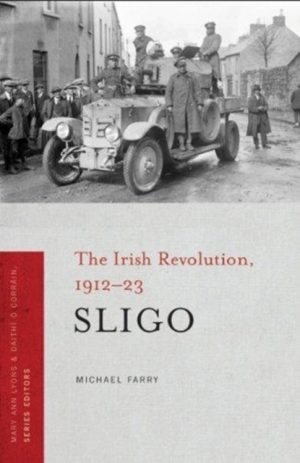
  • Sligo- The Irish Revolution,1912-23

    Sligo- The Irish Revolution,1912-23

    29.95

    Using a wide array of sources and interviews, Michael Farry has produced a balanced, comprehensive and absorbing study of county Sligo from 1912 when the Irish Party controlled all political affairs to 1922–3 when the county saw considerable action during the civil war. This wide-ranging study offers fascinating new insights into the Irish Revolution and details how the county moved from being one of the most loyal to the Irish Party to one of the best-organised Sinn Féin counties. Farry is especially good on how both organised unionism and the strong labour movement in Sligo reacted to the rise of Sinn Féin, its election victory in 1918 and the subsequent Truce, Treaty and civil war. His use of the recently released BMH accounts as well as British military sources results in a richly detailed examination of the IRA campaign and the British reaction. It examines the superior attitude of the IRA towards ‘mere politicians’ during the Truce period and explains why Sligo saw so much conflict during the civil war.

  • Random Chance Another Intelligent Life Form Emerges on Earth

    Random Chance Another Intelligent Life Form Emerges on Earth

    15.00

    Sometime in the future a new intelligent life form, the Ungula, has evolved. They discover aliens buried in the Arctic who turn out to be Humans. After a miraculous revival following a visit to the Lours Shrine, the Ungula and Humans embark on an integration project. Barbara emerges as an Ungula spokesperson and Father Myles as the Human spokesperson.

    Can Humans and Ungula live in harmony? They live together in peace for several months, due mainly to the fact that the Ungula are a mild species and Humans are a small group of just over 100. Most of the humans are content to try and adapt. But as we all know well, there is always one.

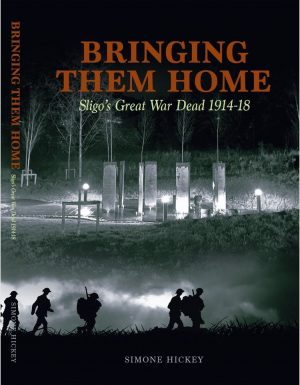
  • Bringing Them Home

    Bringing Them Home

    24.00

    HICKEY, SIMONE

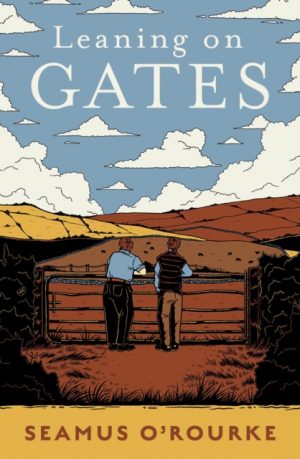
  • Leaning On Gates

    Leaning On Gates

    18.00

    O’ROURKE, SEAMUS

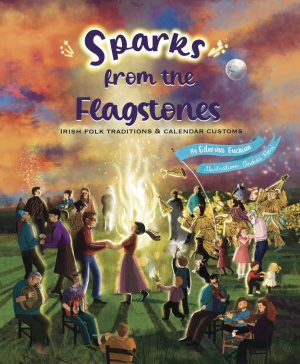
  • Sparks From The Flagstones

    Sparks From The Flagstones

    24.00

    Description

    Dancer Edwina Guckian celebrates the folk traditions and calendar customs of the Ireland in which she grew up in rural County Leitrim.

    As a child Edwina’s Grandfather brought her to House Dances where he played the fiddle and she watched dancers in hobnail boots ‘knock sparks from the flagstones’ on traditional cottage stone floors. Half-doors were taken down from their hinges to dance on when the floors were rough or uneven.

    Edwina too became ‘a great one for knocking sparks’ from the flagstones with her own dancing. Here she brings to life for readers of all ages the lovely colourful customs, fun and enchantments of her childhood. Dressing up for Halloween, Wren Day and  Brigid’s Day, going to communal bonfires at the crossroads, remembering the harvest ‘meitheal’ and hilltop berry picking on Bilberry Sunday.

    Edwina vividly brings to life a world of Strawboys, Mummers and Biddy Boys, Crossroads Dances, Cake Dances, Nollaig na mBan feasts, Easter treats and many more year round Irish folk traditions.

    Join Edwina as she dances through the Celtic Calendar Year and the importance of ancient Quarter Day customs and old-world Fire Festival traditions at Samhain, Imbolc, Bealtaine and Lughnasa. Every page of Sparks from the Flagstones is joyfully illustrated by Connemara-based artist Andrea Rossi.

  • An Irish Civil War Dugout Tormore Cave, County Sligo

    An Irish Civil War Dugout Tormore Cave, County Sligo

    48.00

    A brutal Civil War erupted across Ireland in June 1922. The IRA, in opposition to the development of a pro-Treaty government, returned to the familiar guerrilla tactics of the War of Independence. Hundreds of dugouts constructed in rural settings were key to the IRA campaign.

    These secret places offered safe shelter to men on the run, while also allowing for supplies and arms to be stored and prisoners held. Tormore Cave, high in the mountains of County Sligo, in the northwest of Ireland, was one such dugout. Over 30 Republican men sought refuge there for six weeks in September and October 1922.

    Like most dugouts, Tormore Cave was never mentioned in historical accounts or documentary sources, but its significance was remembered locally. Archaeological excavations conducted on the centenary of its occupation revealed the extensive modifications that had transformed this natural limestone cave into a habitable military dugout, a crucial refuge for combatants whose comrades had been executed or arrested by Government forces. The historical artefacts and environmental material recovered during the excavations, combined with detailed archaeological surveys and analyses, provide a fascinating insight into the conditions endured by those billeted there.

    The lives of the men and women directly associated with the cave dugout are explored, including an in-depth study of IRA General Officer Commanding Billy Pilkington – a key figure during the Irish revolutionary period who has, until now, been largely overlooked. An Irish Civil War Dugout: Tormore Cave, County Sligo adopts a multidisciplinary approach, the first of its kind in an Irish context, combining archaeology, local and military histories, family memories, community recollections, and landscape studies. This groundbreaking study – the first archaeological excavation of a Civil War site in Ireland, facilitates a wider discussion of the role of dugouts in guerrilla warfare.

    By focussing in detail on one site at a local level, this book provides a unique and valuable contribution to the Irish revolutionary period on a regional and national scale.

  • Sligo History and Society

    Sligo History and Society

    60.00

    Available Now

    Featuring essays from:

    Mary Gilmartin, Martin Timoney, Noel McCarthy, Carleton Jones, John Waddell, Rachel Moss and Tamyln McHugh, Kieran O’Connor, Yvonne McDermott, Nollaig Ó’Muraíle, Jack Johnston, Brendan Scott, Pádraig Lenihan, Conchubar Ó Crualaoich, David A. Fleming, David Dickson, Ciarán Mac Murchaidh, Tom Bartlett, Marie Boran and Brigid Clesham, Perry McIntyre and Richard Reid, Gerard Moran, Thomas Power, Jonathan Cherry, Fiona Gallagher, Aideen Ireland, Miriam Moffitt,  Mary Timoney, R.F. Foster, Charles Travis, Gregory Daly, Patrick E. O’Brien, Michael Farry, Anne O’Dowd, Proinnsias Breathnach, and Mary Cawley.

    Further information coming soon.