Showing 97–112 of 125 results
-

€24.95
Fall in love with Ireland’s dramatic mountains and rugged coastline in 50 unforgettable hikes. Roz Purcell has been hiking the length and breadth of Ireland for years with her enthusiastic community The Hike Life, exploring the best of what the island has to offer. This book brings to life the beauty and majesty of hiking in Ireland along with practical advice, easy-to-follow route descriptions and a wealth of tips.
In it you’ll find: the ultimate fifty hikes to do on the island of Ireland, from rugged mountains to forest trails and cliff walks; the complete guide to everything you need for a safe and enjoyable hike; dozens of recommendations for pitstops and photo opportunities along the way to turn your hike into a full-day adventure; and breathtaking photography to inspire you to get out there and start hiking.
-

€14.95
PJ Kirby and Kevin Twomey are two mammy’s boys from Cork who are always up for a skit. The I’m Grand Mamual is Kevin and PJ’s hilarious and heart-warming ode to their mammies, Phil and Nuala. Taking a different well-worn saying – such as ‘We haven’t died a winter yet’ and ‘Sure, who’d be looking at you anyway?’ – Kevin and PJ recount wild experiences from their lives – from coming out, holidays and money management to dating, hustling and sustainability – where the phrase has rung true, proving that ‘Mam always knows best.
With great humour and middling advice, The I’m Grand Mamual is a big-sisterly companion that proudly celebrates embracing yourself and the uniquely Irish mother-child relationship.
-
€12.00
Description
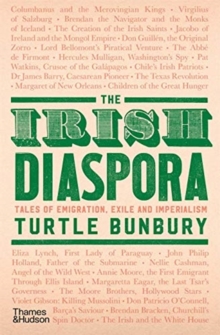
The Irish have always been a travelling people. In the centuries after the fall of Rome, Irish missionaries carried the word of Christianity throughout Europe, while soldiers and mariners from across the land ventured overseas in all directions. Since 1800 an estimated 10 million people have left the Irish shores and today more than 80 million people worldwide claim Irish descent.
The advent of the British Empire ignited a slow but extraordinary exodus from Ireland. The pioneering explorers of the Tudor Age were soon overtaken in number by religious refugees, the ‘Wild Geese’ who opted to live outside of the Protestant state and to take their chances in the Spanish or French empires, or in America. The Irish played a pivotal role in the foundation of the United States of America, just as they would in the Civil War that followed eighty-five years later.
The lives of Irish emigrants wove in and out of the major events of global history, including the Abbe Edgeworth, confessor to King Louis XVI at his execution during the French Revolution; Margaretta Eagar, governess to the daughters of Nicholas II, the last Tsar of Russia; and William Lamport, who travelled from County Wexford to Central America, and became Don Guillen, a martyr for Mexican independence. Turtle Bunbury explores the lives of those men and women, great and otherwise, whose journeys – whether driven by faith, a desire for riches and adventure, or purely for survival – have left their mark on the world.
-
€22.95
Description
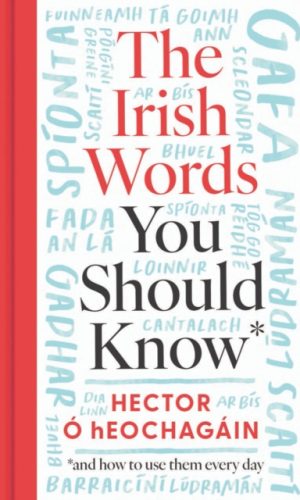
‘The best book on the Irish language I have ever read – so funny, so soulful’ Tommy Tiernan Loinnir: The sunlight sparkling on the waves, or the merriness you feel after early pints of stout in the morning. When you speak in Irish, every word is a tiny poem that reveals a new perspective. The Irish language is our inheritance.
-
€18.95
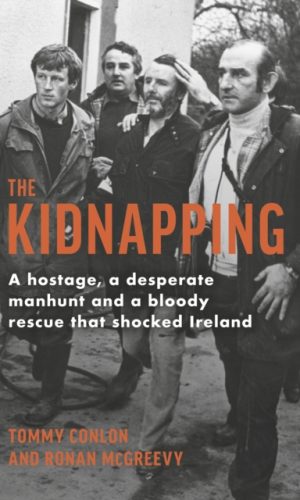
November 1983. As top supermarket executive Don Tidey sets out on the school run, he is snatched from his car and driven away at speed. The IRA, using kidnapping to fund its armed campaign, has its latest victim.
What follows is a massive manhunt and, twenty-three days later, a chaotic rescue in a Leitrim wood. No one emerges unscathed – not the man at the centre of the drama, not the local community, not the gardai, not the Irish state. And especially not the families of the soldier and the young garda killed as Tidey is freed.
Powerful, intimate and searching, The Kidnapping is a brilliantly reported account of an iconic episode. At its heart are remarkable interviews with Don Tidey, talking about these events in detail for the first time, and with the families of Private Kelly and Garda Sheehan who explain the devastating fall-out for them. The book also raises thought-provoking questions about the legacy of these events for today’s Ireland.
-
€12.00
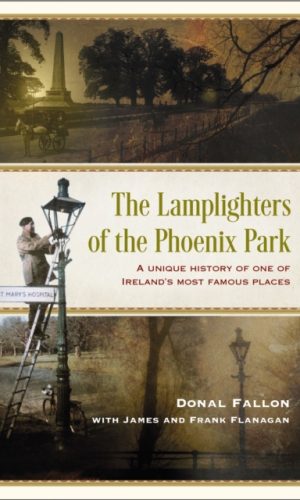
The Phoenix Park in Dublin holds a special place in the collective memory of Irish people. From the assassinations of 1882 and the destruction of several imperial monuments, to the arrival of Douglas Hyde as Ireland’s first president and Pope John Paul’s 1979 visit, it has been at the centre of Irish society for centuries. But the park is also part and parcel of daily life for many Dubliners – none more so than the Flanagan family, who have been lighting the gas lamps within its walls since 1890.
Here, historian Donal Fallon speaks to brothers Frank and James Flanagan, lamplighters of the park, to give us a snapshot of a fading tradition, and a unique history of one of Ireland’s most beloved places. With stunning photographs, historical events and personal stories, The Lamplighters of the Phoenix Park shines a light on the park at the centre of our national identity, through the prism of this singular family, whose histories have been intertwined for more than 150 years.
-
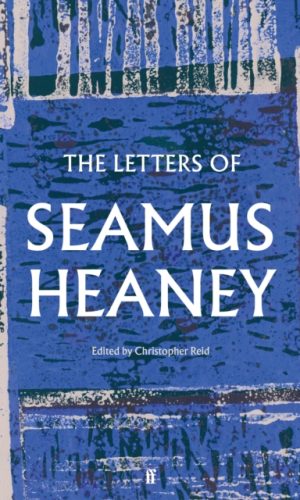
€45.00
Every now and again I need to get down here, to get into the Diogenes tub, as it were, or the Colmcille beehive hut, or the Mossbawn scullery. At any rate, a hedge surrounds me, the blackbird calls, the soul settles for an hour or two . . .
For all his public eminence, Seamus Heaney seems never to have lost the compelling need to write personal letters. In this ample but discriminating selection from fifty years of his correspondence, we are given access as never before to the life and poetic development of a literary titan – from his early days in Belfast, through his controversial decision to settle in the Republic, to the gradual broadening of horizons that culminated in the award of a Nobel Prize and the years of international acclaim that kept him heroically busy until his death.
Editor Christopher Reid draws from both public and private archives to reveal this story in the poet’s own words. Generous, funny, exuberant, confiding, irreverent, empathetic and deeply thoughtful, the letters encompass decades-long relationships with friends and colleagues, as well as showing an unstinted responsiveness to passing acquaintances. Moreover, Heaney’s joyous mastery of language is as evident here as it is in any of his writing for a literary readership.
Listening to Heaney’s voice, we find ourselves in the same room as a man whose presence, when he lived, enriched the world immeasurably, and whose legacy continues to deepen our sense of what truly matters.
-
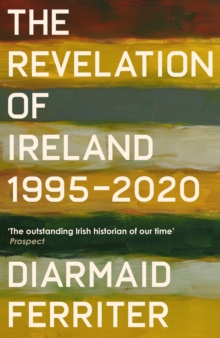
€31.95
Ireland is a strikingly different country now to the one it was in the mid-1990s. Dramatic economic, social and cultural changes, including the Celtic Tiger boom and increasingly secular debate about abortion, the status of women and same-sex marriage underlined the scale of the transformation. The new diversity of the population and literary and musical prowess also revealed a country experiencing rapid alteration.
The road to peace – that saw an end to war in Northern Ireland and culminated in the first visit to southern Ireland of a reigning British monarch in 100 years – illuminated the new Anglo-Irish dynamic. Explosive revelations about deep betrayals from the past destroyed the credibility of the traditionally powerful Catholic Church. And in the wake of the 2008 financial crash, Ireland rebounded and rebuilt to great success, but remained plagued by health and housing failures.
Economic recovery, the end of civil war politics, ever closer European involvement and Anglo-Irish highs were followed by Brexit lows and increasing talk of Irish unity. There is much to open people’s eyes in this riveting account of contemporary Ireland. As the Republic enters its second century of independence, and the North continues to grapple with the legacy of the Troubles, Diarmaid Ferriter makes historical sense of post-1990s Ireland, and what lies in the darkest corners of its archives.
-
-
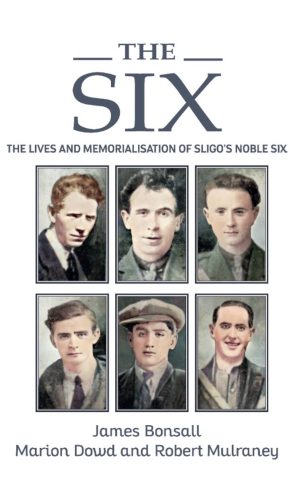
€30.00
It is September, 1922. As the National Army closes in on the anti-Treaty stronghold of Rahelly House in North Sligo, 120 Republicans of the 3rd Western Division abandon their headquarters and retreat to the mountains. En route to a cave hideout in the uplands, six of the men are surrounded and captured. They would not survive one of the most brutal advances of the new Free State Army. Their deaths caused outrage and bewilderment across the county and essentially marked the end of the Civil War in Sligo. These men came to be memorialised as Sligo’s Noble Six.
This book looks beyone the well-documented accounts of the execution of Sligo’s Noble Six and explores the interwoven stories of their lives, their communities, their families, and their descendants. The men’s lives are illustrated through military archives, IRA dispatches, contemporary media coverage, and previously unpublished photos. Their memorialisation through poetry and prose, monuments and gatherings, has ensured that these six men live beyond the tragedy of their deaths.
-
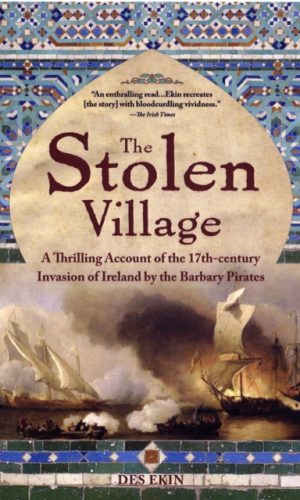
€14.95
In June 1631 pirates from Algiers and armed troops of the Turkish Ottoman Empire, led by the notorious pirate captain Morat Rais, stormed ashore at the little harbour village of Baltimore in West Cork. They captured almost all the villagers and bore them away to a life of slavery in North Africa. The prisoners were destined for a variety of fates — some would live out their days chained to the oars as galley slaves, while others would spend long years in the scented seclusion of the harem or within the walls of the Sultan’s palace.
The old city of Algiers, with its narrow streets, intense heat and lively trade, was a melting pot where the villagers would join slaves and freemen of many nationalities. Only two of them ever saw Ireland again. The Sack of Baltimore was the most devastating invasion ever mounted by Islamist forces on Ireland or England.
Des Ekin’s exhaustive research illuminates the political intrigues that ensured the captives were left to their fate, and provides a vivid insight into the kind of life that would have awaited the slaves amid the souks and seraglios of old Algiers. The Stolen Village is a fascinating tale of international piracy and culture clash nearly 400 years ago and is the first book to cover this relatively unknown and under-researched incident in Irish history. Shortlisted for the Argosy Irish Nonfiction Book of the Year Award.
-
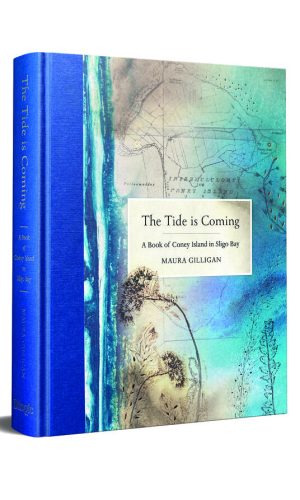
€50.00
The Tide is Coming – a book of Coney Island in Sligo Bay by Maura Gilligan –
is a beautiful limited-edition publication containing prose, poetry, interviews, photographs
and artwork.
As the title of this book suggests, the rhythm of the tides has, for centuries, dictated the
rhythm of life on Coney Island. During his lifetime, Islander John McGowan called out the
warning “the tide is coming” countless times, ensuring that visitors would cross the causeway
safely before channels at either side closed the strand passage and made an island of his
shores.
This little island is said to have given its name to Coney Island in New York! Its ancient
name, Inismulclohy, can be found in maps, records and annals.
Contents
Insightful poetry and prose reflect the author’s thoughts as she moves across the Island in
space and time.
Author-transcribed interviews with Island elder John McGowan form an integral part of this
book, illuminating eight decades of life in a place inhabited by John’s ancestors since 1789.
There are echoes here of life on other offshore Irish islands, now uninhabited.
Photographer James Fraher’s haunting black and white images, together with Catherine
Fanning’s remarkable paintings, prints and line drawings, add visual depth and magic.
Special Features
The book itself is a work of art; a striking hardback cover collage is enhanced by timeless
quarter binding, head and tail bands, marker ribbon and rich-coloured endpapers. Sumptuous
Munken paper provides the perfect backdrop for superb illustrations and exceptional writing.
Folded within the pages of this book is a surprise – an A3 loose-leaf ‘Map of Coney Island in
Sligo Bay’, which can be framed. Created from an old and fragile line-drawn original, the
current version of this map illustrates locations on and around the Island, some of which still
carry their original Irish names.
The Tide is Coming is a wonderful history of an Irish island and a perfect gift.
-
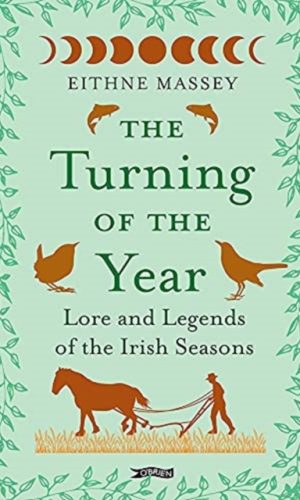
€17.95
Description
From the author of the hugely successful book Legendary Ireland, The Turning of the Year explores the Celtic division of the year, from Samhain to Imbolc, to Bealtaine, to Lunasa, back to Samhain. It examines the significance of particular times of the year and features re-tellings of various legends associated with them. The book will look at the close connection of the Irish with the land and with nature, bringing us on an exhilarating journey through the Irish seasons and the customs that welcomed each one in turn.
-
€23.50
The Turning Tide is a hymn to a sea passage of world-historical importance. Combining social and cultural history, nature-writing, travelogue and politics, Jon Gower charts a sea which has carried both Vikings and saints, invasion forces and furtive gun-runners, writers, musicians and fishermen. The divided but interconnected waters of the Irish Sea – from the narrow North Channel through St George’s Channel to where the Celtic sea opens out into wide Atlantic – have a turbulent history to match the violence of its storms.
Jon Gower is a sympathetic and interested pilot, taking the reader to the great shipyards of Belfast and through the mass exodus of the starving during the Irish Famine in coffin boats bound for America. He follows the migrations of working men and women looking for work in England and tells the tales of more casual travellers: sometimes seasick, often homesick too. The Irish Sea is also a place with an abundant natural history.
The rarest sea bird in Europe visits its coasts in summer while the rarest goose wings in during winter. Jon Gower navigates waters teeming with life, filled with seals and salt-tanged stories and surveyed by seabirds. At a time when Irish affairs feel like they are building towards an historic crescendo, he tells the story of the people who have crossed these waters, and who live on their shores.
Lyrically written and deeply considered, this is a remarkable and far-reaching book.
-
€16.95
Description
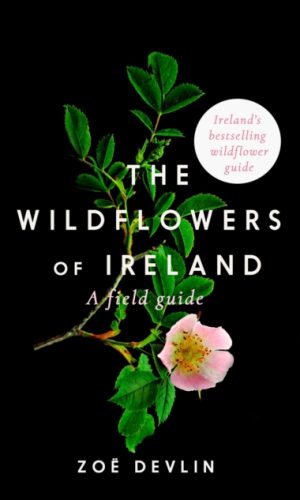
Discover the fascinating world of Ireland’s diverse and astonishing collection of native wildflowers. This new edition reflects the many changes to our botanical knowledge since The Wildflowers of Ireland was first published in 2014. There’s updated information on the distribution of native wildflowers, along with more than 90 additional species, all beautifully photographed by the author.
For ease of identification, the species are divided into colour categories and within each category the species are grouped by, for example, the number of petals in the flower or whether the species carries its flowers in a cluster or a spike. In easily understood terminology, focus is put on the main identifying features of each plant, by colour, size, shape of flower, leaf, habitat, flowering season, and where in Ireland it might be found. This is a must for enthusiasts of all ages and levels of experience.
-
€14.95
‘There is hard-won wisdom here, and good cheer, and a reminder that the world is much wider, older and more interesting than you’d think’ BILL McKIBBEN’Kind, wise and immensely readable’ TIM FLANNERYA thoughtful, illuminating rumination on the life lessons we can take from those who work the land and the millennia of wisdom they draw upon when they go about their day, ‘making a living by turning light and time into money’. As with his previous bestsellers, John Connell skilfully synthesises philosophy, art, literature and spirituality to bolster his thoughts on such topics as stoicism, the food chain and the role of community, leaving the reader convinced of the importance of connecting with their own inner farmer.