Showing 17–32 of 127 resultsSorted by average rating
-
€26.95
Description
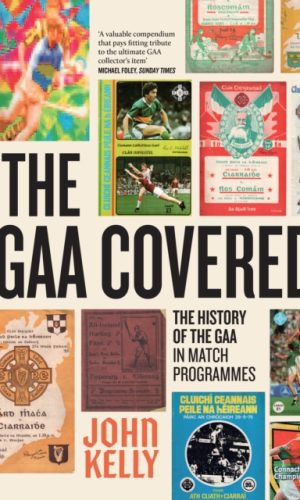
Whether it’s tightly rolled up between two nervous, wringing hands, proudly sticking out from a quick-stepping back pocket or carefully brought home to be kept for posterity, the match day programme is part of the very fabric of the GAA and in The GAA Covered this glorious document gets its long overdue day in the sun. The GAA Covered is a stunning visual compendium of over 100 years of GAA programme covers from 1913 to the present day, and an invaluable collection of local, social and sports history. Each page of this comprehensive collection features striking images of that year’s provincial and All-Ireland final match programmes, along with superb captions of context and colour.
John Kelly’s labour of love will mesmerise GAA fans – from the diehard who will appreciate the compilation of such a wide range of programmes to the casual fan who will be enthralled by the immense beauty of the book.
-
€19.95
*NOTE: Special Pre-Sale Price. This title won’t be shipped until its release date of 11th September 2025*
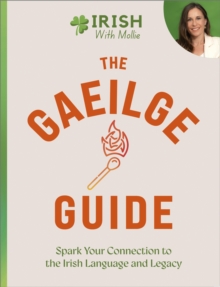
In The Gaeilge Guide, Mollie Guidera – Ireland’s leading online Irish teacher and creator of the hit platform ‘Irish with Mollie’ – brings her joyful, down-to-earth approach to the page in a book guaranteed to spark your connection to the Irish language and legacy. This fresh and empowering journey, where language and culture are fite fuaite le chéile – intertwined together – offers practical guidance and useful phrases, along with heartfelt stories that reveal the humanity within the words, and much more. Mollie shows us how to reconnect with our ancient and endangered language replacing frustration with determination and fear with fierce intention.
Whether you’re dipping in out of curiosity or diving deep, The Gaeilge Guide is your warm, wise and welcome companion to rediscovering the language that captures the soul and memory of the Irish people.
-
€25.95
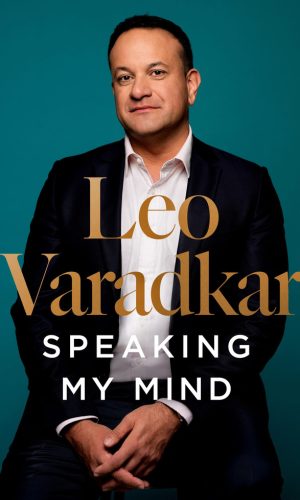
Leo Varadkar shares his fascinating experience as Irish prime minister at a time of much change and turbulence, in this remarkably honest memoir. Leo Varadkar was an unlikely Taoiseach – the youngest on taking office in 2017, the first Taoiseach to be gay, and the first person of colour to be Taoiseach. Equally unlikely was his decision to bow out of politics in his mid-forties.
Now, liberated from the constraints of office, he tells his fascinating story with characteristic courage and candour, and provides a unique insight into the formation and evolution of a senior politician. In Speaking My Mind Leo Varadkar shares his pride in helping to bring about transformational changes, such as marriage equality. He describes experiences that only a prime minister could have – speaking frankly to Pope Francis on the legacy of church abuses, connecting with Barack Obama about both being the ‘tall, dark guy with the funny name’, navigating challenges such as the pandemic and the fallout from Brexit.
And he writes honestly about the costs that go with the immense privilege of holding high office. Speaking My Mind is a revealing, intimate and important memoir from a singular public figure.
-
€17.00
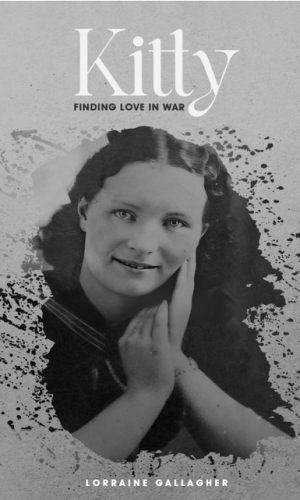
Growing up in 1930’s rural Ireland, Kitty had a hard start to life. Never knowing her father meant that she always had a longing to know what he was like. aFter moving to London to start a new life for herself, Kitty had not planned on World War 2 starting and making life very difficult. Little did she know that meeting an English soldier at an Irish dance would change her life forever.
-
€25.00
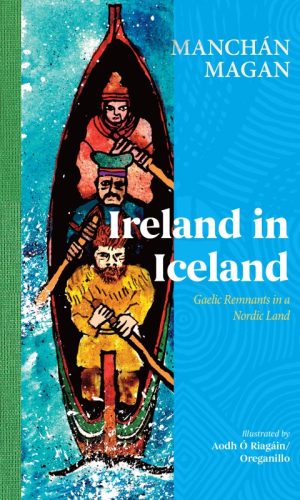
In this richly illustrated journey, Manchán Magan traces the forgotten presence of the Irish in Iceland; monks and migrants, storytellers and shapeshifters who helped shape a land we’ve long imagined as purely Norse.
Through language, lore, place names, DNA, and landscape, Magan uncovers the traces of Gaelic life woven through Iceland’s sagas and stones. With curiosity and care, this book reveals how two island nations, once deeply connected, share more than we’ve been taught to remember. Ireland in Iceland offers a new perspective on ancestry, belonging, and the lasting traces of culture carried across oceans.
Ireland in Iceland is the second in a series of illustrated books Manchán is publishing with Mayo Books Press, exploring cultural similarities and resonances between Ireland, India, Iceland, and the Aboriginal cultures of Australia. Ireland in Iceland is illustrated by Aodh Ó Riagáin/ Oreganillo.
-
€20.00
PRE -ORDER
This book will be shipped once available on release (Approx 25th August)
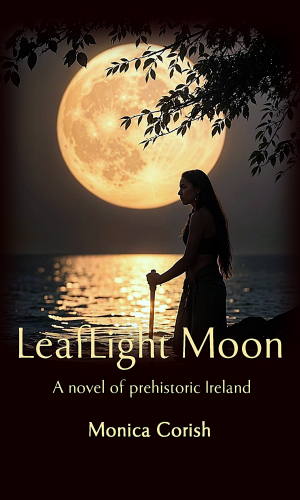
LeafLight Moon – a novel of prehistoric Ireland
Sligo, 4000 BC: Closely researched and set in the rich prehistoric landscapes of Sligo and the north-west, LeafLight Moon tells the story of the fateful encounter between Ireland’s first farmers and the hunter-gatherers of the Hearth of MotherMountain – the mountain we call Knocknarea.
For thousands of years, the hunter-gatherers of MotherMountain lived close to the earth, moving through the landscape with the seasons, following her rhythms and keeping her ways. They heard stories of a people who chopped down the greenwood and trapped animals behind fences, but these were only rumours, shiver-tales to share around the fire on long summer nights – until the day when two strangers arrived in a small boat, their skin as pale as downy-birch,
their eyes as dark as the eyes of seals…
-
€25.00
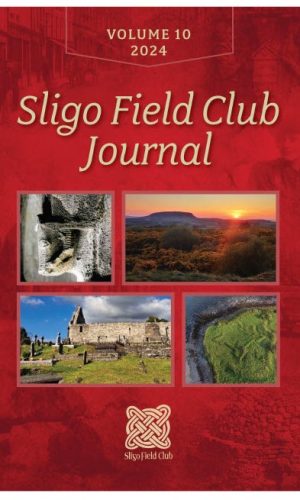
An Ongoing Mission: this Journal will continue the ambition of Sligo Field Club, formerly Sligo Antiquarian Society, and now in its eightieth year, to protect Sligo’s rich archaeological and historical heritage. The Journal provides a platform for authors to record and analyse the rich heritage of Sligo and the greater North Connacht region across a wide range of topics.
-
€19.95
In the 1800s, as Britain became the world’s most powerful industrial empire, Ireland starved. The Great Famine fractured long-held assumptions about political economy and ‘civilisation’, threatening disorder in Britain. Ireland was a laboratory for empire, shaping British ideas about colonisation, population, ecology and work.
In Rot, Padraic Scanlan reinterprets the history of this time and the result is a revelatory account of Ireland’s Great Famine. In the first half of the nineteenth century, nowhere in Europe – or the world – did the working poor depend as completely on potatoes as in Ireland. To many British observers, potatoes were evidence of a lack of modernity among the Irish.
However, Ireland before the famine more closely resembled capitalism’s future than its past. While poverty before and during the Great Famine was often blamed on Irish backwardness, it did in fact stem from the British Empire’s embrace of modern capitalism.
Uncovering the disaster’s roots in Britain’s deep imperial faith in markets and capitalism, Rot reshapes our understanding of the Famine and its tragic legacy.
-
€19.95
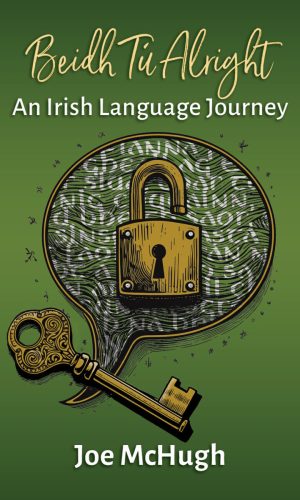
Beidh Tú Alright is a powerful nod to the resilience of the human spirit, the importance of cultural heritage, and the joy of lifelong learning. McHugh’s personal story will inspire both those who have yet to start their Irish language journey and those who may have once given up.
-
-

€10.95
Manchán Magan is fascinated by words, particularly Irish words, and their connections to the natural world. Having enjoyed great success with the bestselling Tree Dogs, Banshee Fingers and Other Irish Words for Nature, he now brings his infectious wonder and enthusiasm for the Irish language to an even younger audience with this board book featuring simple translations for favourite animals, birds, fish and insects. The accompanying stunning black-line illustrations will transfix even the littlest reader.
Teach your little one a cúpla focail from the get-go.
-
€22.95
Description
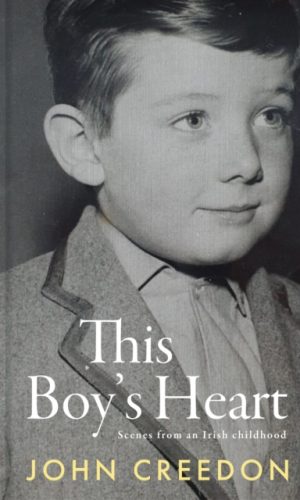
John Creedon is a renowned storyteller. Following on from the sensational success of An Irish Folklore Treasury, here he seeks to capture the folklore of his own childhood. This Boy’s Heart is set in a city-centre household bursting with humanity, with a cast of a dozen children and another dozen adults, including beloved aunts, an American writer, an African doctor and a Scottish bookie.
-

-

€17.95
Description
‘A wonderfully engaging, honest and witty portrait of the humiliations, idealism, nobility and banality of democratic life’ – Rory Stewart, author of Politics on the Edge’Wryly self-deprecating, but also informative and illuminating’ – Matt CooperAs Ireland’s Minister for Housing, Eoghan Murphy took on one of the toughest briefs in government, one that continues to be a challenge today. Looking back at his life in the build-up to parliamentary office and at his time in the cabinet, Eoghan brings a self-lacerating and deeply personal view of the life of a modern politician trying – and often failing – to make the positive change he hoped to deliver. Brutal and sometimes harrowing, Eoghan’s tale is also surprisingly funny, though the humour is only ever at the author’s expense.
-
€19.95
Description
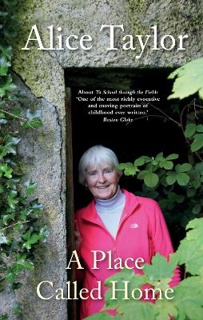
In fact, two places called home …For over sixty years, Alice Taylor has lived in the village of Innishannon, the gateway to West Cork. But her childhood was spent on a farm in North Cork, near the Kerry border, and her memories of that homeplace are vivid. Here, she recalls the sounds and smells of the farmyard, now silent; she visits her old national school, today in ruins, and her secondary, which has a new life as a cultural centre.
-

€9.95
Description
‘I wanted him to be someone he wasn’t. I wanted me to be someone I wasn’t.’A stunning new book from the number one bestselling, award-winning author of All the Things Left Unsaid and Staring at Lakes. To mark his 70th birthday Michael Harding travelled to Spain and walked the Camino de Santiago.
Yet, as he set off on his pilgrimage, he found he wasn’t alone. Accompanying him on his 126-kilometre walk in theheat of the Spanish sun was the ghost of his long-dead father, a distant and aloof figure whom he lost when he was only twenty-two years old. Here, with searing honesty and beautifully wrought prose, Harding examines how this man, who had diedalmost half a century ago, could have had such a profound effect on the writer’s life.