Showing 1–16 of 126 resultsSorted by popularity
-
€20.00
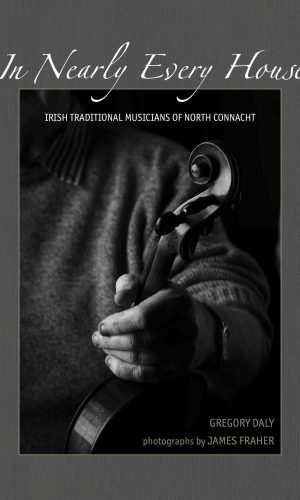
This book contains biographies along with
black and white photographs featuring
over one hundred traditional musicians
from counties Sligo, Leitrim, Roscommon
and Mayo. Through the author’s unique
personal and musical connection to the
musicians of the North Connacht region,
he uses a conversational interview style to
draw out their stories, revealing both the
individual and collective experience within
that tradition.
-

€19.95
The Irish language has thirty-two words for field. Among them are: Geamhar – a field of corn-grass; Tuar – a field for cattle at night; Reidhlean – a field for games or dancing; Cathairin – a field with a fairy-dwelling in it. The richness of a language closely tied to the natural landscape offered our ancestors a more magical way of seeing the world. Before we cast old words aside, let us consider the sublime beauty and profound oddness of the ancient tongue that has been spoken on this island for almost 3,000 years. In Thirty-Two Words for Field, Manchan Magan meditates on these words – and the nuances of a way of life that is disappearing with them.
-
€20.00
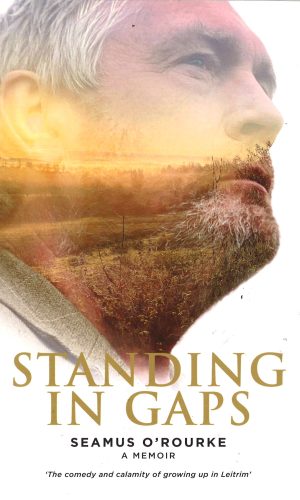
‘Standing in Gaps’ Seamus O’Rourke – A Memoir
From far away Leitrim looks small and our lives insignificant. Not enough there to fill out the pages of a fairly thick book. Well come closer, and I’ll show you. And remember … it’s not a memory test. Who cares what I can remember. I just want to tell about the misery and the fun we had. It was all around me. In the fields and the houses. In the people and the time. This was my time. And what a time it was, if you had nothing better to be at.
‘The comedy and calamity of growing up in Leitrim’
Seamus O’Rourke is an award-winning writer, director and actor from County Leitrim. He tours Ireland regularly with his own self-penned shows. Seamus has over two million hits on YouTube and Social Media with his collection of short stories, recitations and sketches.
-
€50.00
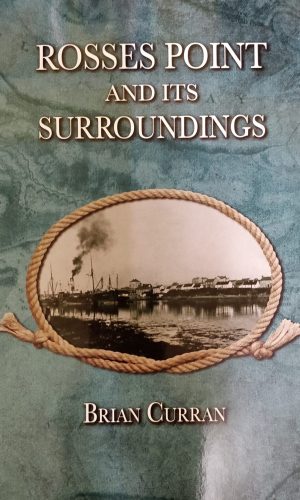
Rosses Point and Its Surroundings is an illustrated history of one of Sligo’s most celebrated coastal areas spanning centuries, from the early Christian period to the land confiscations of the 17th century, the development of shipping and other maritime industries.
It details the evolution of Rosses Point village from a traditional clachan settlement to a fashionable ‘watering place’ in the 19th century, examines the history of education on the peninsula.
-
€30.00
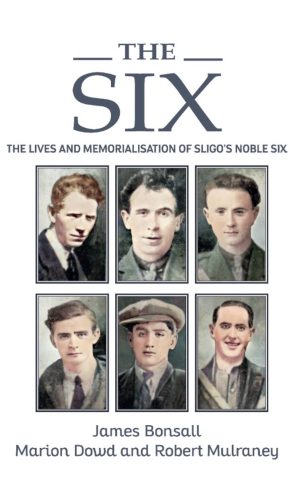
It is September, 1922. As the National Army closes in on the anti-Treaty stronghold of Rahelly House in North Sligo, 120 Republicans of the 3rd Western Division abandon their headquarters and retreat to the mountains. En route to a cave hideout in the uplands, six of the men are surrounded and captured. They would not survive one of the most brutal advances of the new Free State Army. Their deaths caused outrage and bewilderment across the county and essentially marked the end of the Civil War in Sligo. These men came to be memorialised as Sligo’s Noble Six.
This book looks beyone the well-documented accounts of the execution of Sligo’s Noble Six and explores the interwoven stories of their lives, their communities, their families, and their descendants. The men’s lives are illustrated through military archives, IRA dispatches, contemporary media coverage, and previously unpublished photos. Their memorialisation through poetry and prose, monuments and gatherings, has ensured that these six men live beyond the tragedy of their deaths.
-
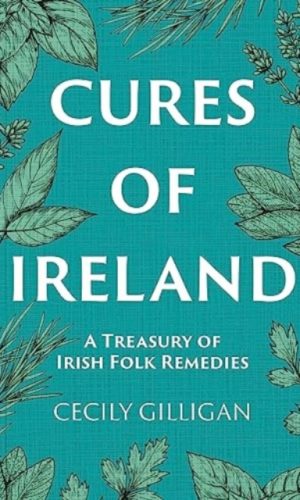
€22.95
A fascinating new book celebrating Ireland’s rich tradition of folk cures, medicines and charms.
It’s said that almost everyone in Ireland, particularly in rural communities, will know of someone with a ‘cure’. It might be for the mumps, a stye in the eye, or a sprain. Indeed the author of Cures of Ireland, Cecily Gilligan was herself cured of jaundice and ringworm by a ‘seventh son’ in her local Sligo during her childhood.
Cecily Gilligan has been researching the rich world of Irish folk cures for almost forty years and, given the tradition has largely been an oral one, has been interviewing a broad range of people from around the country who possess these mystical cures, and those who have benefited from their gifts. One has a cure for eczema that comprises herbal butter balls, another ‘buys’ warts from the sufferer with safety pins. There are stories of clay from graves with precious healing properties and pieces of cords from potato bags being sent across the world to treat asthma.
While the Ireland of the twenty-first century continues to develop at lightning speed, there is something deeply comforting and reassuring in the fact that these ancient healing traditions, while fewer in number, do survive to this day.
Cures of Ireland is an exquisite book that will be treasured by many generations to come.
-
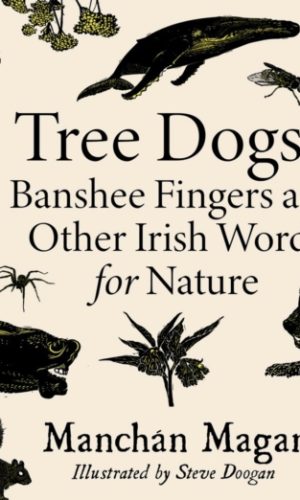
€19.95
Description
‘In Irish there are so many great rain words and magic words and highly specific natural words (such as the material put on the hooves of donkeys to stop them slipping in ice), or words to communicate with animals, or evocative plant words, or the gorgeous words for different amounts of light in the sky, or words that hint at different ways of seeing colour, or twilight words … ‘ Manchan Magan is fascinated by words, particularly Irish words, with all of their complex meanings and associations and their connections to the natural world. Having enjoyed huge success with his bestselling book Thirty-Two Words for Field, Manchan now brings his infectious wonder and enthusiasm for the Irish language to a younger audience, offering delightful translations and explanations of animal, bird, fish, insect and nature words.
When you see the world through Irish, you see the world differently. Get ready to share the magic with this delightful book for readers of all ages.
-
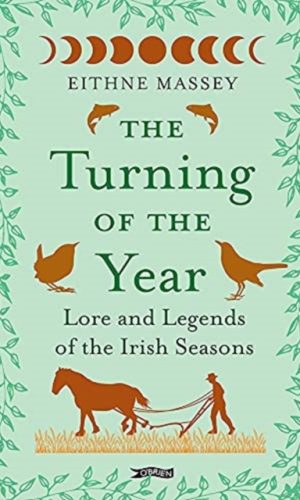
€17.95
Description
From the author of the hugely successful book Legendary Ireland, The Turning of the Year explores the Celtic division of the year, from Samhain to Imbolc, to Bealtaine, to Lunasa, back to Samhain. It examines the significance of particular times of the year and features re-tellings of various legends associated with them. The book will look at the close connection of the Irish with the land and with nature, bringing us on an exhilarating journey through the Irish seasons and the customs that welcomed each one in turn.
-
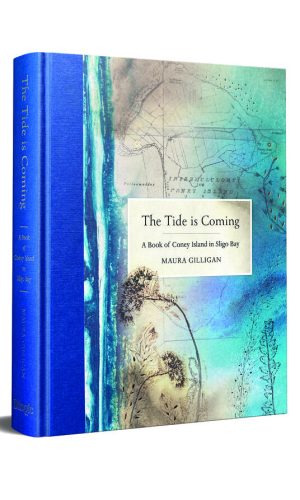
€50.00
The Tide is Coming – a book of Coney Island in Sligo Bay by Maura Gilligan –
is a beautiful limited-edition publication containing prose, poetry, interviews, photographs
and artwork.
As the title of this book suggests, the rhythm of the tides has, for centuries, dictated the
rhythm of life on Coney Island. During his lifetime, Islander John McGowan called out the
warning “the tide is coming” countless times, ensuring that visitors would cross the causeway
safely before channels at either side closed the strand passage and made an island of his
shores.
This little island is said to have given its name to Coney Island in New York! Its ancient
name, Inismulclohy, can be found in maps, records and annals.
Contents
Insightful poetry and prose reflect the author’s thoughts as she moves across the Island in
space and time.
Author-transcribed interviews with Island elder John McGowan form an integral part of this
book, illuminating eight decades of life in a place inhabited by John’s ancestors since 1789.
There are echoes here of life on other offshore Irish islands, now uninhabited.
Photographer James Fraher’s haunting black and white images, together with Catherine
Fanning’s remarkable paintings, prints and line drawings, add visual depth and magic.
Special Features
The book itself is a work of art; a striking hardback cover collage is enhanced by timeless
quarter binding, head and tail bands, marker ribbon and rich-coloured endpapers. Sumptuous
Munken paper provides the perfect backdrop for superb illustrations and exceptional writing.
Folded within the pages of this book is a surprise – an A3 loose-leaf ‘Map of Coney Island in
Sligo Bay’, which can be framed. Created from an old and fragile line-drawn original, the
current version of this map illustrates locations on and around the Island, some of which still
carry their original Irish names.
The Tide is Coming is a wonderful history of an Irish island and a perfect gift.
-
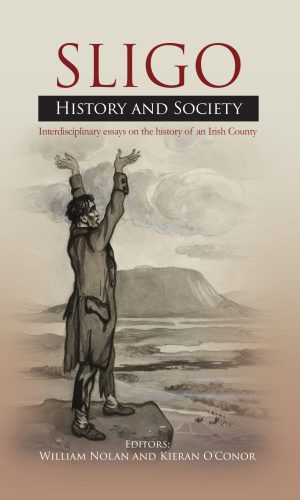
€60.00
Available Now
Featuring essays from:
Mary Gilmartin, Martin Timoney, Noel McCarthy, Carleton Jones, John Waddell, Rachel Moss and Tamyln McHugh, Kieran O’Connor, Yvonne McDermott, Nollaig Ó’Muraíle, Jack Johnston, Brendan Scott, Pádraig Lenihan, Conchubar Ó Crualaoich, David A. Fleming, David Dickson, Ciarán Mac Murchaidh, Tom Bartlett, Marie Boran and Brigid Clesham, Perry McIntyre and Richard Reid, Gerard Moran, Thomas Power, Jonathan Cherry, Fiona Gallagher, Aideen Ireland, Miriam Moffitt, Mary Timoney, R.F. Foster, Charles Travis, Gregory Daly, Patrick E. O’Brien, Michael Farry, Anne O’Dowd, Proinnsias Breathnach, and Mary Cawley.
Further information coming soon.
-
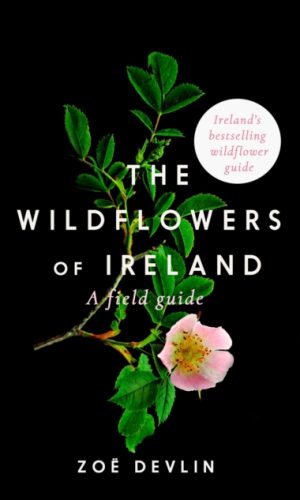
€16.95
Description
Discover the fascinating world of Ireland’s diverse and astonishing collection of native wildflowers. This new edition reflects the many changes to our botanical knowledge since The Wildflowers of Ireland was first published in 2014. There’s updated information on the distribution of native wildflowers, along with more than 90 additional species, all beautifully photographed by the author.
For ease of identification, the species are divided into colour categories and within each category the species are grouped by, for example, the number of petals in the flower or whether the species carries its flowers in a cluster or a spike. In easily understood terminology, focus is put on the main identifying features of each plant, by colour, size, shape of flower, leaf, habitat, flowering season, and where in Ireland it might be found. This is a must for enthusiasts of all ages and levels of experience.
-
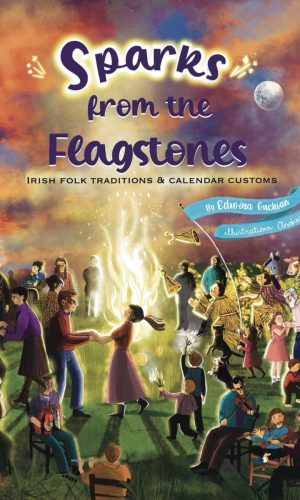
€24.00
Description
Dancer Edwina Guckian celebrates the folk traditions and calendar customs of the Ireland in which she grew up in rural County Leitrim.
As a child Edwina’s Grandfather brought her to House Dances where he played the fiddle and she watched dancers in hobnail boots ‘knock sparks from the flagstones’ on traditional cottage stone floors. Half-doors were taken down from their hinges to dance on when the floors were rough or uneven.
Edwina too became ‘a great one for knocking sparks’ from the flagstones with her own dancing. Here she brings to life for readers of all ages the lovely colourful customs, fun and enchantments of her childhood. Dressing up for Halloween, Wren Day and Brigid’s Day, going to communal bonfires at the crossroads, remembering the harvest ‘meitheal’ and hilltop berry picking on Bilberry Sunday.
Edwina vividly brings to life a world of Strawboys, Mummers and Biddy Boys, Crossroads Dances, Cake Dances, Nollaig na mBan feasts, Easter treats and many more year round Irish folk traditions.
Join Edwina as she dances through the Celtic Calendar Year and the importance of ancient Quarter Day customs and old-world Fire Festival traditions at Samhain, Imbolc, Bealtaine and Lughnasa. Every page of Sparks from the Flagstones is joyfully illustrated by Connemara-based artist Andrea Rossi.
-

-
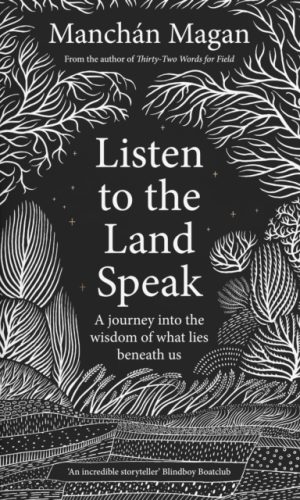
€22.95
Description
Our ancestors developed a uniquely nature-focused society, centred on esteemed poets, seers, monks, healers and wise women who were deeply connected to the land. They used this connection to the cycles of the natural world – from which we are increasingly dissociated – as an animating force in their lives. In this illuminating new book, Manchan Magan sets out on a journey, through bogs, across rivers and over mountains, to trace these ancestor’s footsteps.
He uncovers the ancient myths that have shaped our national identity and are embedded in the strata of land that have endured through millennia – from ice ages through to famines and floods. Here, the River Shannon is a goddess, and trees and their life-sustaining root systems are hallowed. See the world in a new light in this magical exploration into the life-sustaining wisdom of what lies beneath us.
-

€49.00
This major illustrated study investigates farmhouse and cabin furniture from all over the island of Ireland. It discusses the origins and evolution of useful objects, what materials were used and why, and how furniture made for small spaces, often with renewable elements, was innate and expected. Encompassing three centuries, it illuminates a way of life that has almost vanished. It contributes as much to our knowledge of Ireland’s cultural history as to its history of furniture. …
-
€50.00
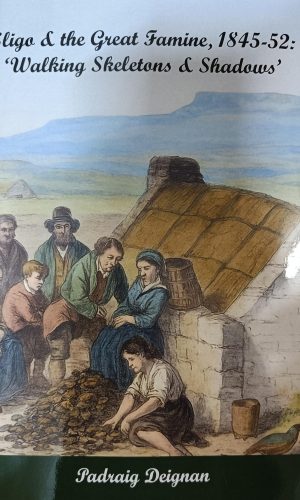
Sligo offers a unique setting for a study of the Great Famine and the book investigates the period from the first appearance of the blight to the immediate aftermath. The shifting, inept and often heartless government policies reflected different attitudes to famine relief and this impacted on the people in a very direct and often catastrophic way.
Sligo experienced considerable death and emigration in the years from 1845 to 1852; the second worst affected county in the country after Mayo, losing a third of its population in just a few short years. The reaction of local landlords and landholders to the suffering was also varied and the study explored the lengths to which the Famine offered an opportunity to some landlords to impose long-term policies on their estates.
Padraig Deignan has previously published ‘The Protestant Community in Sligo, 1914-49’ in 2010, ‘Land and People in Nineteenth Century Sligo: from Union to Local Government’ in 2015 and ‘Sligo in the Eighteenth Century’ in 2021.